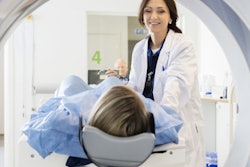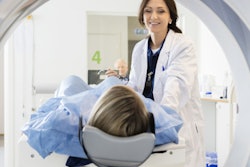
More than 56,000 patients with chest pain were given basic exercise tests last year instead of recommended CT scans to detect or rule out heart disease, according to new data released by the Royal College of Radiologists (RCR) and the British Society of Cardiovascular Imaging (BSCI).
Provision of coronary CT angiography (CCTA) varies across the U.K., with Scotland and Wales performing fewer than 30% of the minimum number of CCTA scans that experts say are needed. Scan waiting lists vary widely, with some patients waiting more than six months due to a lack of capacity.
 Dr. Giles Roditi.
"It is beyond frustrating that we do not have the capacity to provide what should be a routine front-line test for everyone presenting with chest pain," said Dr. Giles Roditi, president of the BSCI. "Instead, in many hospitals it is easier for a runner with a dodgy knee to get an MRI scan than it is for a patient on the verge of a heart attack to get a CCTA. Deadly cases of heart disease are being missed because we can't deliver these scans properly across the U.K."
Figures distributed by the RCR and BSCI on 8 November to coincide with the 2018 International Day of Radiology, which is focusing on cardiac imaging, reveal that only 75,791 CCTA scans were performed in total across the U.K. last year. This amounts to a shortfall of 43%, or at least 56,289 patients with angina missing out on scans.
Because the total number of CCTA scans will have covered a range of different investigations, not just recent onset of chest pain, the true numbers of these patients missing out will have been much higher, according to a statement from the RCR and BSCI.
Wales and Scotland have biggest shortfall
Provision for CCTA was best in England, with 69,865 scans performed in 2017, but if all the relevant angina referrals in England were scanned early, the number would have been at least 111,239, meaning a 37% shortfall, according to the organizations.
By proportion of population, Wales has the biggest gap in CCTA provision, with an estimated 4,854 patients missing out on scans last year (a 78% shortfall in the minimum number of scans needed). This compares with 7,900 missed scans in Scotland (73% shortfall) and 2,162 in Northern Ireland (58% shortfall).
| CCTA scan provision by country | |||||
| Country | 2017 population | Total CCTA scans provided 2017 | Minimum scans needed (based on benchmark of 200 per 100,000 population) | Shortfall -- minimum No. of patients missing out | Shortfall (%) |
| U.K. | 66,040,200 | 75,791 | 132,080 | 56,289 | 43% |
| England | 55,619,400 | 69,865 | 111,239 | 41,374 | 37% |
| Scotland | 5,424,800 | 2,950 | 10,850 | 7,900 | 73% |
| Wales | 3,125,200 | 1,396 | 6,250 | 4,854 | 78% |
| Northern Ireland | 1,870,800 | 1,580 | 3,742 | 2,162 | 58% |
The lack of capacity was also highlighted in an anonymous poll of BSCI consultants, which revealed waiting times for CCTA exams are as long as 26 weeks at some hospitals. Radiologists want to see more investment in cardiac imaging expertise and state-of-the-art CT scanners to ensure all patients with chest pain get a CCTA scan.
 RCR President Dr. Nicola Strickland. Image courtesy of Christof Pelz.
"It is remarkably sad that the CCTA technology exists to diagnose life-threatening heart disease before it kills people, but patients are being denied access because the U.K. government and devolved administrations are failing to invest in training the radiologist doctors needed to report these scans, as well as the state-of-the-art CT scanners needed to perform them," noted Dr. Nicola Strickland, president of the RCR.
The U.K. fares badly in terms of CT scanner provision across European member states of the Organization for Economic Co-operation and Development (OECD). Tied with Hungary, the U.K. only has nine CT scanners per 1,000,000 people, while France has 17 per 1,000,000 and Germany has 35, the OECD states. In addition, many of the U.K.'s CT scanners are not modern enough to perform CCTAs.
While many "generalist" radiologists do become accredited experts in CCTA scanning via the BSCI, fewer than 150 of the U.K.'s 5,303 radiologists consider themselves to be cardiac specialists, the authors of the RCR 2017 Clinical Radiology UK Workforce Census Report concluded.