The British Institute of Radiology (BIR) and GE Healthcare are partnering together on a radiation safety travel award worth 1,000 pounds (1,135 euros).
The award aims to foster the sharing of best practices in radiation safety. Participants are asked to design a new tool or resource to improve radiation safety in healthcare, such as software or a device. The winner will receive funding to travel to a relevant scientific conference of his or her choice to present the innovation.
Applicants must be a BIR member and complete the application form, available for download at www.bir.org.uk/radiationsafetyaward, giving details of the resource or tool in fewer than 500 words, and return it to [email protected]. The closing date for applications is 31 March.
GE and BIR give the award every two years, and applicants are judged by a BIR. Results will be announced by 30 April and presented at a BIR event later in the year.




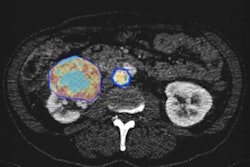



![Overview of the study design. (A) The fully automated deep learning framework was developed to estimate body composition (BC) (defined as subcutaneous adipose tissue [SAT] in liters; visceral adipose tissue [VAT] in liters; skeletal muscle [SM] in liters; SM fat fraction [SMFF] as a percentage; and intramuscular adipose tissue [IMAT] in deciliters) from MRI. The fully automated framework comprised one model (model 1) to quantify different BC measures (SAT, VAT, SM, SMFF, and IMAT) as three-dimensional (3D) measures from whole-body MRI scans. The second model (model 2) was trained to identify standardized anatomic landmarks along the craniocaudal body axis (z coordinate field), which allowed for subdividing the whole-body measures into different subregions typically examined on clinical routine MRI scans (chest, abdomen, and pelvis). (B) BC was quantified from whole-body MRI in over 66,000 individuals from two large population-based cohort studies, the UK Biobank (UKB) (36,317 individuals) and the German National Cohort (NAKO) (30,291 individuals). Bar graphs show age distribution by sex and cohort. BMI = body mass index. (C) After the performance assessment of the fully automated framework, the change in BC measures, distributions, and profiles across age decades were investigated. Age-, sex-, and height-adjusted body composition reference curves were calculated and made publicly available in a web-based z-score calculator (https://circ-ml.github.io).](https://img.auntminnieeurope.com/mindful/smg/workspaces/default/uploads/2026/05/body-comp.XgAjTfPj1W.jpg?auto=format%2Ccompress&fit=crop&h=112&q=70&w=112)


