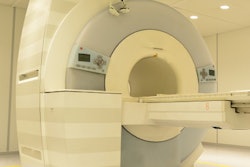
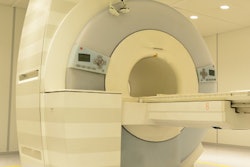
The metal detector designed to prevent the introduction of metal objects into the MRI suite where an Indian man was killed was "not functional," according to a new report on the incident published by the Hindustan Times.
What's more, the MRI suite had piped oxygen flowing into the room -- meaning it wasn't necessary for Rajesh Maru to carry an oxygen cylinder into the room as he accompanied his mother-in-law for her scan. Maru was killed when the cylinder was pulled into the room and damaged; authorities believe the leaking tank caused him to sustain a fatal pneumothorax.
Officials with Brihanmumbai Municipal have been investigating the incident, according to the article. They found that Indian hospitals had implemented a three-layer screening process to prevent the introduction of metal objects into MRI rooms after a 2014 incident that also involved an oxygen tank being sucked into an MRI suite.
The screening process includes the use of metal detectors at the entrance to all MRI rooms, but the detector at BYL Nair Hospital in Mumbai "wasn't functioning," according to a municipal official. The room is also outfitted with an oxygen supply via nonmetallic pipe connections in case patients need it, which obviates the need to bring an oxygen tank into the room.
There is also debate over whether Maru brought the tank into the room on his own or whether he was instructed to do so by hospital staff. Initial reports indicated that he was told to carry the cylinder inside, but hospital staff members say that video footage of the incident shows that he may have picked up the tank voluntarily.





![Overview of the study design. (A) The fully automated deep learning framework was developed to estimate body composition (BC) (defined as subcutaneous adipose tissue [SAT] in liters; visceral adipose tissue [VAT] in liters; skeletal muscle [SM] in liters; SM fat fraction [SMFF] as a percentage; and intramuscular adipose tissue [IMAT] in deciliters) from MRI. The fully automated framework comprised one model (model 1) to quantify different BC measures (SAT, VAT, SM, SMFF, and IMAT) as three-dimensional (3D) measures from whole-body MRI scans. The second model (model 2) was trained to identify standardized anatomic landmarks along the craniocaudal body axis (z coordinate field), which allowed for subdividing the whole-body measures into different subregions typically examined on clinical routine MRI scans (chest, abdomen, and pelvis). (B) BC was quantified from whole-body MRI in over 66,000 individuals from two large population-based cohort studies, the UK Biobank (UKB) (36,317 individuals) and the German National Cohort (NAKO) (30,291 individuals). Bar graphs show age distribution by sex and cohort. BMI = body mass index. (C) After the performance assessment of the fully automated framework, the change in BC measures, distributions, and profiles across age decades were investigated. Age-, sex-, and height-adjusted body composition reference curves were calculated and made publicly available in a web-based z-score calculator (https://circ-ml.github.io).](https://img.auntminnieeurope.com/mindful/smg/workspaces/default/uploads/2026/05/body-comp.XgAjTfPj1W.jpg?auto=format%2Ccompress&fit=crop&h=112&q=70&w=112)


