Dear AuntMinnieEurope Member,
The growth of the Internet has had many benefits for medical publishing over the past decade, but one of the drawbacks is the huge proliferation of articles. The advent of online journals has made it simple and cheap to post seemingly ever-longer papers, and keeping up with the literature is now virtually impossible.
The Maverinck addresses this issue in his latest column and, as usual, he has some fascinating observations and solutions. Click here to read more.
We also have a hard-hitting column this week about radiological training. Dr. Paul McCoubrie is concerned that too much structure and too little flexibility pose a serious threat to the future of the discipline. Also, he fears there is an overemphasis on purely the number of cases handled by trainees. Go to our Digital X-Ray Community, or click here.
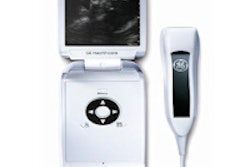
Where's ultrasound heading? What does the future hold for compact systems? Market analyst Stephen Holloway has looked seriously at these questions, and thinks he has some answers. Get the story here.
Meanwhile, researchers in the Netherlands have sought to determine variations in mammography screening performance among radiologists performing double reading of mammograms. They measured referral rate, cancer detection rate, sensitivity, and positive predictive value of referral, and their findings have been published by European Radiology. Visit our Women's Imaging Digital Community, or click here.
Any European research that's published in the U.S. journal Radiology is worth a close look, so I'm sure you'll want to read about a new study from Munich, Germany, involving the use of PET/CT for detecting the recurrence of neuroendocrine tumors. To read more, go to your Molecular Imaging Digital Community, or click here.
Last but not least, ECR 2014 begins in Vienna tomorrow. Our editorial team will be reporting live from the congress, so make sure you keep checking our RADCast @ ECR by visiting radcast.auntminnieeurope.com. For even quicker updates from the meeting, follow us on Twitter by clicking here.