Revenues for the global ultrasound market will continue to expand and will exceed $6 billion by 2012, according to a new report by market research firm InMedica, a division of IMS Research of Wellingborough, U.K.
The report cited the modality's flexibility, ease of use, and relatively low cost for the upward growth pattern over the next four years, despite a recessionary worldwide economy.
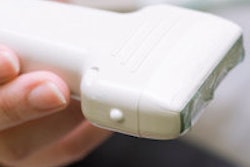
The trend to miniaturize ultrasound technology and the adoption of handheld ultrasound equipment also is fueling growth.
Related Reading
Ultrasound market projected to reach $6.2 billion by 2015, October 22, 2008
Chinese ultrasound market poised for growth, October 17, 2008
European cardiologists eye hand-carried ultrasound, May 20, 2008
3D/4D ultrasound prospers in Western Europe, May 20, 2008
Compact ultrasound driving global US market, May 29, 2007
Copyright © 2009 AuntMinnie.com







![Overview of the study design. (A) The fully automated deep learning framework was developed to estimate body composition (BC) (defined as subcutaneous adipose tissue [SAT] in liters; visceral adipose tissue [VAT] in liters; skeletal muscle [SM] in liters; SM fat fraction [SMFF] as a percentage; and intramuscular adipose tissue [IMAT] in deciliters) from MRI. The fully automated framework comprised one model (model 1) to quantify different BC measures (SAT, VAT, SM, SMFF, and IMAT) as three-dimensional (3D) measures from whole-body MRI scans. The second model (model 2) was trained to identify standardized anatomic landmarks along the craniocaudal body axis (z coordinate field), which allowed for subdividing the whole-body measures into different subregions typically examined on clinical routine MRI scans (chest, abdomen, and pelvis). (B) BC was quantified from whole-body MRI in over 66,000 individuals from two large population-based cohort studies, the UK Biobank (UKB) (36,317 individuals) and the German National Cohort (NAKO) (30,291 individuals). Bar graphs show age distribution by sex and cohort. BMI = body mass index. (C) After the performance assessment of the fully automated framework, the change in BC measures, distributions, and profiles across age decades were investigated. Age-, sex-, and height-adjusted body composition reference curves were calculated and made publicly available in a web-based z-score calculator (https://circ-ml.github.io).](https://img.auntminnieeurope.com/mindful/smg/workspaces/default/uploads/2026/05/body-comp.XgAjTfPj1W.jpg?auto=format%2Ccompress&fit=crop&h=112&q=70&w=112)


