Agfa HealthCare's board of directors has issued a statement denying rumors that the company plans to sell its healthcare business group, the company said.
According to Agfa, a number of articles have appeared in the Belgian press stating that Agfa-Gevaert plans to launch a formal sales process for the group. The company's board of directors denied these reports in a statement issued today, stressing that it is committed to the healthcare business group.
"The board has decided that absolute priority must be given to customer satisfaction, to the development of the business, and to operational improvement," the statement said. "The board confirms that no decision has been taken to launch a process for the sale of the HealthCare business group."
Related Reading
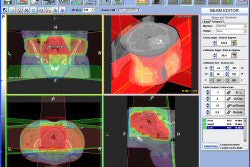
Agfa integrates Barco 3D software, August 19, 2008
Agfa sales dip in Q2, August 11, 2008
Agfa, Nexsan team up, July 28, 2008
Agfa taps new VP for IT, July 23, 2008
Agfa receives Premier contract, July 18, 2008
Copyright © 2008 AuntMinnie.com






![Overview of the study design. (A) The fully automated deep learning framework was developed to estimate body composition (BC) (defined as subcutaneous adipose tissue [SAT] in liters; visceral adipose tissue [VAT] in liters; skeletal muscle [SM] in liters; SM fat fraction [SMFF] as a percentage; and intramuscular adipose tissue [IMAT] in deciliters) from MRI. The fully automated framework comprised one model (model 1) to quantify different BC measures (SAT, VAT, SM, SMFF, and IMAT) as three-dimensional (3D) measures from whole-body MRI scans. The second model (model 2) was trained to identify standardized anatomic landmarks along the craniocaudal body axis (z coordinate field), which allowed for subdividing the whole-body measures into different subregions typically examined on clinical routine MRI scans (chest, abdomen, and pelvis). (B) BC was quantified from whole-body MRI in over 66,000 individuals from two large population-based cohort studies, the UK Biobank (UKB) (36,317 individuals) and the German National Cohort (NAKO) (30,291 individuals). Bar graphs show age distribution by sex and cohort. BMI = body mass index. (C) After the performance assessment of the fully automated framework, the change in BC measures, distributions, and profiles across age decades were investigated. Age-, sex-, and height-adjusted body composition reference curves were calculated and made publicly available in a web-based z-score calculator (https://circ-ml.github.io).](https://img.auntminnieeurope.com/mindful/smg/workspaces/default/uploads/2026/05/body-comp.XgAjTfPj1W.jpg?auto=format%2Ccompress&fit=crop&h=112&q=70&w=112)


