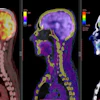
A two-site research study is showing positive results for Philips Healthcare's decision support software tool for the automatic evaluation of dementia using PET image data.
One study from researchers at the University Medical Center Hamburg-Eppendorf in Hamburg, Germany, found that in FDG-PET scans from 83 patients, the software achieved better than 98% agreement with the expert physician's interpretation when programmed to differentiate between brain scans showing no signs of dementia, brain scans characteristic of Alzheimer’s disease, and those characteristic of frontotemporal dementia.
In a similar 48-patient study at Austin Hospital in Melbourne, Australia, the software achieved better than 80% accuracy in differentiating between the PET scans of nondiseased patients, those suffering from Alzheimer's, those suffering from frontotemporal dementia, and those suffering from Lewy body dementia.
In releasing the results, Philips of Andover, MA, noted that the so-called four-class differential diagnosis is more difficult, because indications of Alzheimer's and Lewy body dementia occur in similar areas of the brain, while indications of frontotemporal dementia appear in a separate area of the brain.
Following the results of these studies, Philips Research is conducting additional studies involving the software in collaboration with the University of Washington in Seattle.
Related Reading
Philips opens Latin American MRI plant, October 15, 2008
Philips grows revenues in Q3, but profit falls, October 14, 2008
Philips, Steris team on hybrid ORs, October 7, 2008
Philips files PET/CT suit against Siemens, October 2, 2008
Philips, University of Urbino ink contrast deal, September 24, 2008
Copyright © 2008 AuntMinnie.com