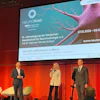
Dr. Mathias Goyen argues that physicians don't have to be emotionally unaffected to be good doctors, and that losing enthusiasm often reflects difficult working conditions rather than lost caring ability. Healthcare organizations can support physicians by creating environments where doctors can acknowledge uncertainty, discuss difficult cases, and ask for help without fear of judgment.
- Emotional exhaustion in physicians is often a systemic problem, not an individual weakness requiring more resilience or mindfulness alone
- The confusion between professional responsibility and emotional invulnerability creates a culture where doctors hide struggles instead of seeking support
- Healthcare leaders play a critical role by modeling vulnerability, when department heads admit uncertainty and mistakes, younger physicians feel safer doing the same
- Practical organizational changes like brief post-case discussions and normalizing second opinions require minimal financial investment but significant cultural shift
- The core question is not just physician wellbeing but recognizing that quality patient care depends on how healthcare systems treat the people who provide that care
After a difficult case, colleagues might spend 10 minutes discussing what happened. Radiologist Dr. Mathias Goyen would add a question to that conversation: How did it affect the physician who had to make the call?
Goyen, chief medical officer at GE HealthCare, explores that question in Who Holds the Doctor?, the final book in a trilogy that began with the gaps in medical training and went on to examine practices that persist in healthcare despite their shortcomings.
In an interview he discusses how physicians can tell whether they’ve lost their enthusiasm for medicine or are worn down by the conditions in which they practice. He also explains what department leaders can do to make it easier for doctors to admit uncertainty, ask for a second opinion, and talk about a case that stayed with them.
Aunt Minnie Europe: Your first two books explored the gaps in medical education and the shortcomings of healthcare systems. In Who Holds the Doctor?, you turn your attention to the emotional burden of caring for others. Was there a particular moment, personal experience, or encounter with a colleague that made you realize this was the missing piece of the trilogy? And what were the other books about?
Mathias Goyen: There wasn’t one particular moment. Rather, it was a realization that emerged from many years of working with physicians, both in hospitals and in the healthcare industry. My first book was about what medical school doesn’t prepare us for. The second was about the things we know are wrong in healthcare but continue doing anyway. And at some point, I realized there was something important I hadn’t really addressed: what all of this does to the people who are expected to care for others.
I’ve met many excellent physicians who were still doing their jobs extremely well but who had lost something along the way. Their enthusiasm, their confidence, sometimes even their ability to enjoy what they were doing.
And what struck me was that we rarely ask these people how they are doing. We ask whether their patients are doing well, whether their departments are performing, whether they’re meeting expectations. But we almost never ask what the responsibility itself is costing them. That’s really where the third book came from. And in many ways, I think it’s the most personal of the three.
AME: Throughout your book, you examine concepts such as emotional containment, accumulated emotional residue, the burden of uncertainty, and the loneliness of responsibility. If you were speaking to a physician who has gradually lost their empathy, enthusiasm, or sense of meaning in medicine, what would you tell them? What practical steps could help them reconnect with the reasons they entered the profession?
Goyen: The first thing I would tell that physician is that losing enthusiasm doesn’t necessarily mean you’ve lost your ability to care. Sometimes it means you’ve been caring for too long under circumstances that make caring increasingly difficult.
We tend to treat emotional exhaustion as an individual problem. We tell people to become more resilient, take a vacation, exercise, or practice mindfulness. Some of that may help, of course. But it doesn’t solve the underlying problem. I would encourage that physician to talk to someone they trust, preferably another physician who understands what the work actually involves. And if the exhaustion persists or begins to affect their personal life, I would encourage them to seek professional support, without interpreting that decision as a failure of their own resilience. 
I would also ask them to think about what has changed. Is it the medicine itself that no longer gives them satisfaction, or is it the environment in which they’re practicing? That’s an important distinction. I also think we need to give physicians permission to acknowledge that some experiences are difficult, even after twenty or thirty years in the profession. You don’t have to be emotionally unaffected to be a good doctor. In fact, I would argue that being affected by what happens to your patients is part of being human.
AME: In your concluding chapter, you argue that healthcare professionals deserve environments in which their own emotional realities are acknowledged and supported. What needs to change at the organizational, professional, and societal levels to achieve this? And to what extent does the traditional image of the physician as strong, resilient, and almost infallible prevent doctors themselves from acknowledging vulnerability or seeking help?
Goyen: I think we have a problem on both sides. Society expects physicians to be confident, available, competent, and emotionally stable, regardless of what happens around them. And physicians themselves have internalized many of these expectations. We’re trained to take responsibility, make decisions, and maintain control. Those are important qualities, particularly when patients are frightened or seriously ill. But somewhere along the way, we’ve confused professional responsibility with emotional invulnerability. And that’s dangerous.

If the head of a department never admits uncertainty or mistakes, why would a young physician feel comfortable doing so? We need to change what we consider professional strength. Sometimes the strongest thing a physician can do is acknowledge that a situation has been difficult.
AME: If you were invited to design a course for medical students or practicing physicians based on your book, which emotional and interpersonal skills would you prioritize? How can physicians learn to deal with uncertainty, recognize emotional exhaustion, and support one another without compromising their professional responsibilities?
Goyen: I would probably start by telling medical students something that sounds almost too obvious: you will not always know the answer, you will not always be able to help, and you will sometimes make decisions that turn out to be wrong. And that doesn’t automatically make you a bad physician. Medical education is very good at teaching us how to recognize diseases and increasingly sophisticated ways of treating them. But we’re much less systematic about teaching people how to live with uncertainty, how to communicate difficult decisions, or how to deal with the emotional consequences of their work.
I would focus on three things: learning to tolerate uncertainty, learning to recognize your own limits, and learning how to support colleagues. And I would make the course very practical. Real cases, difficult conversations, situations where there isn’t a perfect answer. I also think experienced physicians should be involved, sharing situations they struggled with rather than presenting themselves as people who always knew what to do. Because young doctors don’t need more examples of perfection. They need realistic examples of what good medicine looks like when things become difficult.
AME: Your book identifies many forms of invisible emotional labor, including the responsibility of creating calm, absorbing frustration, and supporting patients through uncertainty. Of all the concepts you explore, which do you believe is most urgently in need of attention? And what concrete measures could healthcare organizations introduce to address it?

Why not make it part of good leadership to ask a physician who has just experienced a difficult patient outcome whether they’re doing okay? And why not create a culture where asking for a second opinion is considered good judgment rather than weakness? None of these measures necessarily requires a substantial financial investment, although they do require time, institutional commitment, and a willingness to reconsider established professional habits. Above all, we need to recognize that the emotional demands of medicine are part of the work itself, rather than something physicians are simply expected to manage privately.
AME: Your book was published about a month ago, on October 20. What reactions have you received so far, particularly from physicians and other healthcare professionals? Have any responses surprised you or challenged your own perspective?
Goyen: Since the book was published in October, what has interested me most in the conversations I have had with physicians is how quickly they recognize the experiences described in it. When you talk about the emotional cost of medicine, you rarely have to explain very much. Physicians immediately understand what you are talking about, even if they have never used those words themselves.
Many of these experiences are rarely discussed openly, despite being familiar to so many people within the profession. It makes me wonder how much of what physicians experience as a personal struggle is actually a shared professional experience for which we have never developed an adequate language.
I am particularly interested in hearing from physicians at different stages of their careers, because I suspect that a young resident may read this book very differently from someone who has been practicing medicine for thirty years. I am also curious whether people outside medicine recognize some of these experiences in their own professions. Although I wrote this book about physicians, the underlying question is much broader: what happens to people who spend their professional lives carrying responsibility for others, and who supports them when they need support themselves?
AME: Although Who Holds the Doctor? concludes your trilogy, do you see opportunities to take its central message further, perhaps through lectures, medical education programs, discussions with healthcare leaders, or an audiobook? Are there already any plans in that direction?
Goyen: I certainly hope the conversation continues beyond the book, because I don’t think publishing a book changes very much by itself. What a book can do is give people language for something they’ve experienced but perhaps never really discussed. And I would be very interested in bringing these ideas into medical education, leadership discussions, and conversations within hospitals. I’ve spent a significant part of my professional life working at the intersection of clinical medicine, healthcare technology, and leadership.
And one thing I’ve learned is that we can invest enormous amounts of money in improving healthcare systems while paying surprisingly little attention to the people who have to make those systems work. So yes, I can imagine lectures, discussions with medical students, and conversations with healthcare leaders. An audiobook is also something I might consider, although nothing has been decided. What matters most to me, however, is the substance of the conversations that follow. I would much rather see a few serious discussions that genuinely change how people work together than a hundred presentations about the importance of physician well-being.
AME: Looking beyond the publication itself, what would you most like this book to achieve? If you could change one thing about the way healthcare professionals are perceived, supported, or supported by one another, what would it be?

What I would like this book to achieve is actually quite simple. I would like physicians to feel that they can talk honestly about the difficult parts of their work without having to defend their professionalism. And I would like healthcare leaders to understand that supporting physicians isn’t an additional benefit or a nice gesture. It’s part of creating a healthcare system that can function well over time. Because ultimately, the quality of care we provide to patients depends, at least in part, on how we treat the people who provide that care. And that’s really the question behind the title: Who holds the doctor?
Who Holds the Doctor? is available on Amazon in paperback and Kindle editions.