By the ESER Committee on Teleradiology: Marcela De La Hoz Polo; Anjali Agrawal; Clare Ashwin; Axel Martin; Fausto Labruto; and ESER President Ana Blanco-Barrio
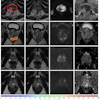
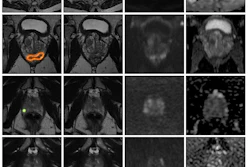
A teleradiologist opens the next examination on the worklist expecting the familiar sequence: clinical history, prior imaging, images. Instead, something else is waiting. A coloured heat map overlays part of the study. A marker highlights a suspected abnormality. Another panel offers an AI-generated finding. The radiologist has never seen this interface before and may not even recognise the algorithm behind it. Is the highlighted area genuinely suspicious? How reliable is this system? Should its suggestion be actively interrogated, or should the examination first be read independently? What was supposed to be another routine case has suddenly acquired an additional cognitive task: interpreting not only the patient's images, but also the output of an unfamiliar AI system that the radiologist never chose to use.
AI is rapidly becoming part of everyday radiology. Algorithms that flag intracranial haemorrhage, pulmonary embolism, fractures, pneumothorax and other abnormalities are increasingly integrated into imaging workflows, often providing results before a radiologist has even opened the examination.

Within a single hospital or healthcare organisation, introducing such tools usually follows an established process. Software is selected, validated, integrated into the local workflow, monitored and governed by the institution deploying it. Radiologists can be trained in its use and informed about its strengths and limitations. That approach is consistent with a 2024 multisociety statement from the ACR, CAR, ESR, RANZCR and RSNA, which treats local validation, workflow integration, user education and post-deployment monitoring as essential parts of clinical AI implementation1.
Teleradiology introduces a different and increasingly important scenario.
A teleradiologist may receive an examination from a client institution accompanied by the output of an AI system that the teleradiology provider did not select, purchase, validate or implement. The radiologist may have little knowledge of the algorithm, its version, validation data, intended use or performance in the population being examined.
AI has effectively arrived as an unannounced guest in the reporting room.
This situation is likely to become increasingly common. It deserves attention before it becomes accepted practice simply because technology has made it possible.
When AI crosses organisational boundaries
Regulatory approval or published validation does not necessarily establish how an algorithm will perform in a particular clinical environment. Performance may be affected by patient populations, scanner manufacturers, acquisition parameters, reconstruction techniques and disease prevalence. It may also change following software updates. The concern is not theoretical: a 2022 systematic review in Radiology: Artificial Intelligence found diminished performance on external datasets in 81% of externally validated deep-learning studies, with substantial decreases in nearly a quarter2.
For a teleradiology organisation receiving examinations from numerous hospitals, potentially across several healthcare systems and countries, the problem becomes particularly complex. A radiologist working a single emergency shift might encounter pulmonary embolism detection from one vendor, intracranial haemorrhage detection from another and fracture detection from several others.
The AI result may travel easily with the images. The knowledge required to interpret that result safely does not necessarily travel with it.
But validation is only part of the problem.
Radiologists develop familiarity with diagnostic tools. When an AI system is used repeatedly, they gradually learn its behaviour: where it performs well, where false positives occur and which situations require particular caution. That experience becomes part of the interaction between radiologist and algorithm and lies at the core of the promise for increased efficiency and accuracy.
Client-supplied AI disrupts this relationship.
If externally generated AI results appear intermittently from different institutions, radiologists may never develop sufficient familiarity with any individual system. Yet the output may still influence interpretation.
A positive result can produce anchoring. A negative result can provide false reassurance. The unfamiliar AI output may distract attention and influence the subsequent interpretation. Experimental evidence also shows how easily misleading decision support can propagate: Gaube and colleagues found diagnostic accuracy fell when physicians and radiologists were given inaccurate advice, regardless of whether it was labelled as coming from AI3 .
There is also the less dramatic but important issue illustrated by the opening scenario: cognitive load. Emergency teleradiology already requires radiologists to move rapidly between institutions, clinical contexts, imaging protocols and reporting environments. Adding unfamiliar AI interfaces and outputs introduces another variable that must be understood and processed.
The relevant question is therefore not simply whether an algorithm performs well in isolation. It is whether the combination of that algorithm, that radiologist and that particular workflow has been designed appropriately. More recently, a Nature Medicine study of 140 radiologists across 15 chest radiograph tasks found substantial heterogeneity in the effects of AI assistance between readers, reinforcing that the performance of the human-AI team cannot be inferred simply from the performance of the algorithm alone4.
Governance at the interface
The most difficult questions emerge when something goes wrong.
Who is responsible for ensuring that the AI system is appropriate for clinical use? Is it the hospital that purchased it, the company that developed it, the teleradiology organisation that allowed its output into the reporting environment, or the individual radiologist who incorporated the information - consciously or unconsciously - into the diagnostic process?
As AI becomes distributed across healthcare networks, responsibility can become fragmented between organisations whose roles were previously clearer. Teleradiology sits directly at this interface.
The solution should not be to prevent AI results from accompanying examinations. Client-supplied AI may provide genuine benefits in detection, prioritisation and efficiency.
But access should not be confused with acceptance.
The appearance of an AI output on a teleradiologist's screen should not automatically make it part of the diagnostic workflow simply because it can technically be transmitted. Its introduction should instead represent a deliberate governance decision between the referring institution and the teleradiology provider.
Before client-supplied AI is incorporated into routine reporting, the provider should know which system is being used, its intended task, its regulatory status and relevant validation, how its output will be displayed and what radiologists are expected to do with the information. Radiologists should receive sufficient information and training to understand its intended use and important limitations. This is also the direction of current European policy: the ESR's 2025 recommendations for implementing the EU AI Act in radiology emphasise AI literacy, transparency, human oversight and post-market monitoring5.
Responsibility should also be defined before clinical use rather than reconstructed after an adverse event. Agreements between referring institutions and teleradiology providers should therefore explicitly address whether AI-generated information will accompany examinations and under what conditions it can be used. They should establish the identity and version of the system, how significant updates will be communicated, what information or training radiologists require, and how responsibility for performance monitoring and investigation of errors will be divided.
Teleradiology providers should also have the ability to decline or suppress AI outputs that have not undergone an agreed governance process.
This need not turn every AI implementation into an administrative obstacle. Governance should be proportionate to risk. The principle, however, should be straightforward: the presence of AI in the reporting environment must be intentional, transparent and accountable.
The issue extends beyond teleradiology.
Radiology AI is often discussed as though an algorithm belongs to a particular radiology department. Increasingly, that assumption may no longer hold. Imaging data already move between hospitals, regional networks, cloud platforms and external reporting providers. AI results will increasingly move with them. A single examination may even be analysed by algorithms operating at several points in its journey. Teleradiology may simply be where this challenge becomes visible first, because organisational boundaries are so explicit.
AI has enormous potential to support teleradiologists. Client-supplied AI should therefore not be viewed primarily as a threat. But neither should it become an unannounced guest.
If an AI system is going to influence a radiologist's interpretation, the radiologist and the organisation responsible for the report should know what that system is, why it is there, what it can and cannot do, and how responsibility for its use has been defined.
The guest should be welcome. But it should be formally introduced first.
References
[1] Brady AP. Radiology AI in the real world: commentary on "Developing, purchasing, implementing and monitoring AI tools in radiology: practical considerations. A multi-society statement from the ACR, CAR, ESR, RANZCR & RSNA". Eur Radiol. 2024 Aug;34(8):5077-5079. doi: 10.1007/s00330-023-10488-4. Epub 2024 Jan 19. PMID: 39017689.
[2] Yu AC, Mohajer B, Eng J. External Validation of Deep Learning Algorithms for Radiologic Diagnosis: A Systematic Review. Radiol Artif Intell. 2022 May 4;4(3):e210064. doi: 10.1148/ryai.210064. PMID: 35652114; PMCID: PMC9152694.
[3] Gaube S, Suresh H, Raue M, Merritt A, Berkowitz SJ, Lermer E, Coughlin JF, Guttag JV, Colak E, Ghassemi M. Do as AI say: susceptibility in deployment of clinical decision-aids. NPJ Digit Med. 2021 Feb 19;4(1):31. doi: 10.1038/s41746-021-00385-9. PMID: 33608629; PMCID: PMC7896064.
[4] Yu F, Moehring A, Banerjee O, Salz T, Agarwal N, Rajpurkar P. Heterogeneity and predictors of the effects of AI assistance on radiologists. Nat Med. 2024 Mar;30(3):837-849. doi: 10.1038/s41591-024-02850-w. Epub 2024 Mar 19. PMID: 38504016; PMCID: PMC10957478.
[5] Kotter E, D'Antonoli TA, Cuocolo R, Hierath M, Huisman M, Klontzas ME, Martí-Bonmatí L, May MS, Neri E, Nikolaou K, Pinto Dos Santos D, Radzina M, Shelmerdine SC, Bellemo A; European Society of Radiology (ESR). Guiding AI in radiology: ESR's recommendations for effective implementation of the European AI Act. Insights Imaging. 2025 Feb 13;16(1):33. doi: 10.1186/s13244-025-01905-x. PMID: 39948192; PMCID: PMC11825415.
The comments and observations expressed are those of the author and do not necessarily reflect the opinions of AuntMinnieEurope.com.