
More radiology departments are implementing percutaneous abscess drainage on an outpatient basis to treat acute mastitis, according to an upcoming course in women's imaging, sponsored by the Spanish Society of Medical Radiology (SERAM) and American Roentgen Ray Society (ARRS).
 Dr. José María Oliver-GoldaracenaCourtesy of SERAM
Breast radiologists today both diagnose and treat breast infection, according to Dr. José María Oliver-Goldaracena, head of the breast radiology section at La Paz University Hospital in Madrid, who will be a speaker at the SERAM-ARRS course in Madrid on 29 and 30 May. In recent years, technological development has led to a paradigm shift from general anesthesia and hospitalization to breast radiology services performed on an outpatient basis.
Acute mastitis is a breast infection caused by bacteria (mostly naturally occurring on the skin). A wound forms, and the germ enters through that wound, causing the infection. Less commonly, the germ reaches the breast via the bloodstream without a break in the skin.
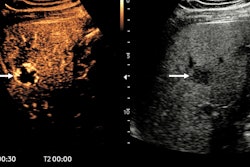
"Diagnosis is always made with ultrasound, and percutaneous drainage of the abscess is also performed with ultrasound guidance," Oliver-Goldaracena said in advance of the course, adding that the technique involves inserting a plastic catheter into the abscess through a skin puncture (local anesthesia is used) to aspirate the pus. The catheter is left in place for a week to 10 days.
“It is important to teach the patient how to manipulate the catheter to aspirate the pus that accumulates every day at home, and we see her every four to five days until we verify that the infection is resolved, and we remove the catheter,” Oliver-Goldaracena pointed out.
Breast infection causes pain and redness of the skin and, if treated promptly with antibiotics, heals quickly. On the other hand, if the patient delays seeking medical attention (usually in the emergency room or with their primary care physician), the infection can progress very rapidly (within days) and cause an abscess, Oliver-Goldaracena noted.
More information about the course can be found on SERAM's website.







![A normal mammogram confirmed by three-year radiologic follow-up illustrates reader-marked regions of interest (ROIs) during (A) unaided (round 1) and (B) artificial intelligence (AI)–assisted (round 2) reading. Each colored dot represents an ROI for recall by a human reader. Readers could mark more than one ROI per case, represented by multiple dots of the same color. During AI-assisted reading, the AI system displayed three visible prompts: two with suspicion of malignancy scores of 35% (left mediolateral oblique [L MLO] and craniocaudal [L CC]) and one with a suspicion of malignancy score of 10% (right craniocaudal [R CC]), shown as polygonal overlays. Without AI, six of 10 readers (60%) marked a false-positive ROI. With AI assistance, this fell to two of 10 (20%). R MLO = right mediolateral oblique.](https://img.auntminnieeurope.com/mindful/smg/workspaces/default/uploads/2026/07/2026-07-14-radiology-mammogram-ai-auto-bias.H0bYO8QlWs.jpg?auto=format%2Ccompress&dpr=2&fit=crop&h=167&q=70&w=250)


