Dear AuntMinnieEurope Women's Imaging Insider,
Sustainability is a buzzword right now in medical imaging, but how exactly can radiology departments become more environmentally friendly?
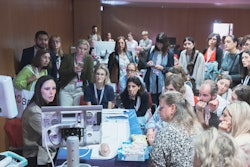
There are few easy answers to this question, but interestingly, the issue was addressed earlier this month at the European Society of Breast Imaging (EUSOBI) annual congress in Lisbon, Portugal. Don't miss our report.
This week's second article from EUSOBI 2024 focuses on the attitudes of Asian women in Singapore toward breast cancer risk assessment and stratified screening.
The mammography landscape continues to evolve as new technologies enter the field, Dr. Eva Pallwein writes in a viewpoint column. Understanding European recommendations and exploring current tools like digital breast tomosynthesis can benefit patient care, she argues.
Meanwhile, researchers from Nijmegen, the Netherlands, have suggested that ordering screening mammograms for reading by increasing volumetric breast density may be feasible. Learn more here about this important study.
In case you missed it at the start of this month, we posted an informative video interview with Prof. Isabelle Thomassin-Naggara, who is president of the Women's Imaging Society in France.
Philip Ward
Editor in Chief
AuntMinnieEurope.com



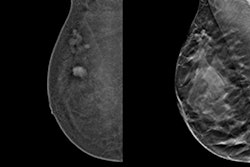
![A normal mammogram confirmed by three-year radiologic follow-up illustrates reader-marked regions of interest (ROIs) during (A) unaided (round 1) and (B) artificial intelligence (AI)–assisted (round 2) reading. Each colored dot represents an ROI for recall by a human reader. Readers could mark more than one ROI per case, represented by multiple dots of the same color. During AI-assisted reading, the AI system displayed three visible prompts: two with suspicion of malignancy scores of 35% (left mediolateral oblique [L MLO] and craniocaudal [L CC]) and one with a suspicion of malignancy score of 10% (right craniocaudal [R CC]), shown as polygonal overlays. Without AI, six of 10 readers (60%) marked a false-positive ROI. With AI assistance, this fell to two of 10 (20%). R MLO = right mediolateral oblique.](https://img.auntminnieeurope.com/mindful/smg/workspaces/default/uploads/2026/07/2026-07-14-radiology-mammogram-ai-auto-bias.H0bYO8QlWs.jpg?auto=format%2Ccompress&fit=crop&h=100&q=70&w=100)


![A normal mammogram confirmed by three-year radiologic follow-up illustrates reader-marked regions of interest (ROIs) during (A) unaided (round 1) and (B) artificial intelligence (AI)–assisted (round 2) reading. Each colored dot represents an ROI for recall by a human reader. Readers could mark more than one ROI per case, represented by multiple dots of the same color. During AI-assisted reading, the AI system displayed three visible prompts: two with suspicion of malignancy scores of 35% (left mediolateral oblique [L MLO] and craniocaudal [L CC]) and one with a suspicion of malignancy score of 10% (right craniocaudal [R CC]), shown as polygonal overlays. Without AI, six of 10 readers (60%) marked a false-positive ROI. With AI assistance, this fell to two of 10 (20%). R MLO = right mediolateral oblique.](https://img.auntminnieeurope.com/mindful/smg/workspaces/default/uploads/2026/07/2026-07-14-radiology-mammogram-ai-auto-bias.H0bYO8QlWs.jpg?auto=format%2Ccompress&fit=crop&h=112&q=70&w=112)


