Dear MRI Insider,
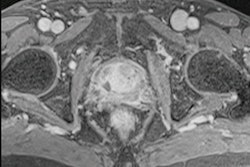
One of the major issues in prostate MRI is the lack of standardization. Technical guidelines exist, but many sites still struggle to create a fully diagnostic protocol.
In a new study, researchers from a network of London hospitals have described how they addressed this problem. Their practical approach and promising results deserve close scrutiny.
U.K. radiology has also been in the news since the publication of the Royal College of Radiologists' annual workforce census on 28 April. Will there be a mass exodus of doctors, including MRI specialists, over the coming months? Not yet, it seems, but there is a real risk of a growing attrition rate as the COVID-19 pandemic continues.
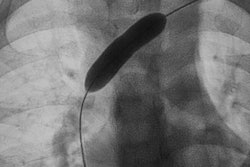
In a third article posted today, Prof. Dr. Thomas Vogl from Frankfurt, Germany, elaborates on how his team treats patients with venous disease. MRI is particularly useful for the diagnosis of sinus vein thromboses, he says.
It's probably not widely known that a breast MRI (axial) scan can look like Mr. Krabs, a character in the U.S. animated TV series SpongeBob SquarePants. Spanish radiologists are convinced that it's useful to bear in mind movie and TV characters, as well as animals, when it comes to tricky cases. To read more, see our report about pareidolia.
On a more serious note, nipple discharge often stems from a benign condition, but breast cancer is a possibility, and MRI is developing a growing role in these cases.
Researchers from Bordeaux, France, say there's a strong need for additional data about the use of breast MRI in this indication. They evaluated the accuracy of breast MRI in identifying lesions requiring excision for patients who had experienced suspicious nipple discharge but had normal mammograms and ultrasound scans. Their results, analysis, and clinical images are worth a look.
This letter features only a few of the many reports posted recently in the MRI Community. Please scroll through the full list below, and feel free to contact me if you have ideas for future coverage.



![Overview of the study design. (A) The fully automated deep learning framework was developed to estimate body composition (BC) (defined as subcutaneous adipose tissue [SAT] in liters; visceral adipose tissue [VAT] in liters; skeletal muscle [SM] in liters; SM fat fraction [SMFF] as a percentage; and intramuscular adipose tissue [IMAT] in deciliters) from MRI. The fully automated framework comprised one model (model 1) to quantify different BC measures (SAT, VAT, SM, SMFF, and IMAT) as three-dimensional (3D) measures from whole-body MRI scans. The second model (model 2) was trained to identify standardized anatomic landmarks along the craniocaudal body axis (z coordinate field), which allowed for subdividing the whole-body measures into different subregions typically examined on clinical routine MRI scans (chest, abdomen, and pelvis). (B) BC was quantified from whole-body MRI in over 66,000 individuals from two large population-based cohort studies, the UK Biobank (UKB) (36,317 individuals) and the German National Cohort (NAKO) (30,291 individuals). Bar graphs show age distribution by sex and cohort. BMI = body mass index. (C) After the performance assessment of the fully automated framework, the change in BC measures, distributions, and profiles across age decades were investigated. Age-, sex-, and height-adjusted body composition reference curves were calculated and made publicly available in a web-based z-score calculator (https://circ-ml.github.io).](https://img.auntminnieeurope.com/mindful/smg/workspaces/default/uploads/2026/05/body-comp.XgAjTfPj1W.jpg?auto=format%2Ccompress&fit=crop&h=100&q=70&w=100)


![Overview of the study design. (A) The fully automated deep learning framework was developed to estimate body composition (BC) (defined as subcutaneous adipose tissue [SAT] in liters; visceral adipose tissue [VAT] in liters; skeletal muscle [SM] in liters; SM fat fraction [SMFF] as a percentage; and intramuscular adipose tissue [IMAT] in deciliters) from MRI. The fully automated framework comprised one model (model 1) to quantify different BC measures (SAT, VAT, SM, SMFF, and IMAT) as three-dimensional (3D) measures from whole-body MRI scans. The second model (model 2) was trained to identify standardized anatomic landmarks along the craniocaudal body axis (z coordinate field), which allowed for subdividing the whole-body measures into different subregions typically examined on clinical routine MRI scans (chest, abdomen, and pelvis). (B) BC was quantified from whole-body MRI in over 66,000 individuals from two large population-based cohort studies, the UK Biobank (UKB) (36,317 individuals) and the German National Cohort (NAKO) (30,291 individuals). Bar graphs show age distribution by sex and cohort. BMI = body mass index. (C) After the performance assessment of the fully automated framework, the change in BC measures, distributions, and profiles across age decades were investigated. Age-, sex-, and height-adjusted body composition reference curves were calculated and made publicly available in a web-based z-score calculator (https://circ-ml.github.io).](https://img.auntminnieeurope.com/mindful/smg/workspaces/default/uploads/2026/05/body-comp.XgAjTfPj1W.jpg?auto=format%2Ccompress&fit=crop&h=112&q=70&w=112)