A real-world implementation study from a Spanish regional hospital suggests that AI-assisted chest radiograph triage may reduce specialist referrals without driving additional CT imaging.
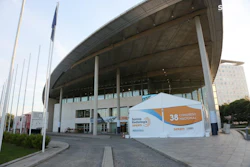
Presented at the 38th National Congress of the Spanish Society of Medical Radiology (SERAM) in Valencia in May 2026, the study, led by Dr. Jorge Treviño Soruco, compared emergency department chest imaging activity before and after deployment of an AI system designed to identify findings such as pneumothorax, pleural effusion, consolidation, pulmonary nodules, and mediastinal masses.
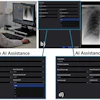
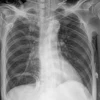
 An AI system highlights multiple abnormalities on a chest radiograph, including a pulmonary nodule (nódulo pulmonar), pleural effusion (derrame pleural), and alveolar syndrome/consolidation (síndrome alveolar).Courtesy of SERAM
The researchers compared August–December 2024, before implementation, with the same period in 2025 after deployment. What they found: Across approximately 5,100 chest radiographs in each period, pulmonology referrals decreased from 5.5% (280/5,075) to 4.2% (218/5,198), representing a 24% relative reduction (p = 0.002). Chest CT utilization remained stable at 5.6% before implementation and 5.4% afterward (282/5,075 versus 280/5,198; p = 0.70).
The findings address a common concern surrounding AI triage systems: that flagging additional abnormalities could increase downstream imaging. Yet in this cohort, that effect was not observed.
Before deployment, the researchers conducted a pilot study of 1,000 emergency chest radiographs interpreted by the AI system and compared the results with readings from a blinded expert radiologist with more than 20 years of experience.
Uncertain findings
The strongest agreement was observed for pneumothorax, pleural effusion, and consolidation. Consolidation achieved a positive predictive value of 83.3%, while pneumothorax and pleural effusion demonstrated high negative agreement rates of 99.9% and 98.3% respectively.
Performance was more limited for pulmonary nodules and mediastinal masses, which generated larger numbers of uncertain findings and lower positive predictive values. The authors emphasized that uncertain AI classifications should be treated as review alerts rather than negative examinations.
To assess clinical relevance, the team reviewed 102 cases that subsequently underwent CT within two months of the index radiograph. Among these, 85 of 102 (83.3%) demonstrated concordance between radiographic findings identified by the AI system and subsequent CT findings.
Concordance rates were similar during working hours (81.6%) and out-of-hours periods (84.4%). CT follow-up findings included primary lung cancer, disseminated pulmonary neoplasia, mediastinal masses, pleural disease, infectious and inflammatory processes, adenopathy, and active tuberculosis.
The authors concluded that AI can support radiologists but not replace them, describing the technology as most useful for screening support, prioritization, and triage within a radiologist-supervised workflow. The study has not yet been published in a peer-reviewed journal.