Dear AuntMinnie Europe Member,
At RöKo 2026 in Leipzig, we spoke with Dr. Florian Gassert of TUM University Hospital in Munich, whose team has now scanned more than 400 patients using the world's first human-size dark-field x-ray scanner. He discussed where the technology stands today, what it would take to reach clinical routine, and whether it could play a role alongside CT in Germany's newly launched lung cancer screening program.
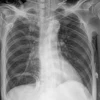
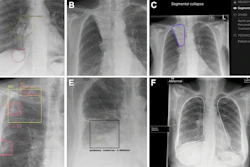
Seven commercial AI devices for detecting lung cancer on chest x-rays were recently put to a head-to-head test, and the results were promising. Sensitivity ranged from 20.8% to 77.8% across the seven platforms, with three devices helping detect more cancerous tumors than radiologist reports alone and four actually helping detect fewer. Read the details here.
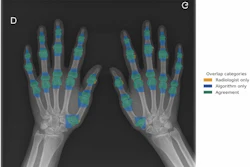
Also, check out our coverage of a radiomics model developed by researchers at Université Paris Cité that can detect structural damage in hand osteoarthritis from routine x-rays. The model is the first to apply radiomics to standard hand radiographs for automated severity scoring, and the authors suggest it could reduce reliance on the subjective visual grading that currently defines the field
And here are a few other stories on AI x-ray research that show both promise and limitations of the technology:
A new ICU chest x-ray dataset has been released to help clinicians develop AI tools for pathology detection at the bedside. ICUs rely heavily on chest x-ray to monitor patients, and the dataset covers pulmonary congestion, pleural effusion, pulmonary opacities, and atelectasis -- findings that are common, consequential, and frequently missed.
We also covered two broader stories with relevance to x-ray practice. A five-year study tracking more than 400,000 AI-processed imaging studies across 20 centers found that governance and workflow integration matter more than the models themselves, with 91% of radiologists using AI but adoption success heavily dependent on how well the tools are embedded in practice.
In other news, we covered what AI still can't do for radiographers. AI tends to fail in exactly the places radiology already does, including ambiguous protocols, complex cases, and situations where junior staff lack the confidence to escalate.
In addition, a study from Geneva University Hospitals tested a commercially available AI fracture detection tool against musculoskeletal radiologists on emergency foot and ankle x-rays. For overall fracture detection the AI performed comparably, but fell short on the most clinically challenging injuries, Chopart and Lisfranc fractures, where missed diagnoses carry the highest consequences.
A recent session on the future of chest x-ray reporting asked a pointed question: does AI toll the beginning of the end for the modality? Speakers argued that chest x-ray will increasingly serve as a gatekeeper for CT rather than a diagnostic endpoint, while warning that legal accountability for AI misses will rest with the clinician acting on the output, not the developer.
Finally, a DEXA study confirmed that playing football has measurable benefits for bone health, with players showing improvements across three scan points over a season.
For more x-ray news, be sure to check in regularly with our Digital X-Ray content area. And as always, if you have x-ray topics you'd like us to consider, please contact me.
Claudia Tschabuschnig
Associate Editor
AuntMinnieEurope.com