Article Summary
Persistence in medical imaging and clinical questioning can detect serious diseases that standard tests miss, as demonstrated by cases where repeated scans and thorough evaluation revealed life-threatening conditions like severe coronary artery narrowing and amyloidosis that initial normal results failed to identify.
- Clinical persistence and willingness to question normal results is as important as the imaging technology itself for preventing missed diagnoses
- Targeted cardiac imaging, routinely used in the Netherlands, could help catch kidney and heart-damaging diseases earlier and limit organ damage
- Patient advocacy and formal disease registration improve access to specialized imaging and cancer-registry support for rare conditions
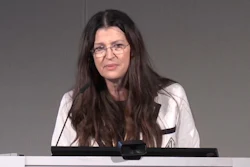
 Christel Put shares her testimony describing how a repeat CT scan revealed the coronary narrowing her first scan had almost missed.© Elio Germani 2026
It started with a sharp, unpredictable pain near the heart, as Christel Put recalls. The pain came and went for months, no pattern to pin down, sometimes during exercise, sometimes at rest, occasionally several episodes in a week, then nothing for days.
With no radiating pain, no shortness of breath, no family history of heart disease, and a body mass index (BMI) of 19, she had none of the classic warning signs. When she finally saw a cardiologist, her electrocardiogram, echocardiogram, and blood tests all came back normal.
 Prof. Rodrigo Salgado, President of the European Society of Cardiovascular Radiology, who insisted on a repeat scan for Christel Put.© Elio Germani 2026
The working theory was esophageal spasm. A CT angiogram with Prof. Rodrigo Salgado came back 99% normal. But Salgado was not convinced. He called her personally the next day and asked her to repeat the scan. The second scan revealed a severe narrowing in one of her coronary arteries.
Within a week she underwent angiography. Robot-assisted bypass surgery followed. This was back in 2016, and she has been symptom-free ever since, all because one doctor was not satisfied with 99%.
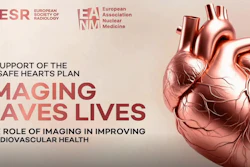
"One doctor looked a little closer," Put told the audience at the "Imaging Saves Lives" event, hosted by the European Society of Radiology (ESR) and the European Association of Nuclear Medicine (EANM) at the European Parliament.
From diagnosis to advocacy
In contrast, Guy Lippens' path to diagnosis took far longer, and the disease itself was one he'd never heard of. A 2016 blood test showing low protein was dismissed. By 2019, worsening symptoms led his general practitioner to test his urine, where the missing protein turned up instead, a red flag serious enough to prompt referral to the University Hospital of Antwerp, where a kidney biopsy and bone marrow puncture confirmed AL amyloidosis, a plasma cell disorder that damages the kidneys and heart. He was told average survival from diagnosis was 12 to 18 months.
 Guy Lippens, founder of the Belgian patient organization AmyBel, speaking about his years-long path to an AL amyloidosis diagnosis.© Elio Germani 2026
With no Belgian patient organization to turn to, Lippens founded one himself, AmyBel, in January 2024. His argument is pointed: targeted cardiac imaging, used routinely in the Netherlands, could have caught the disease earlier and limited the organ damage he now lives with.
The cost of that delay, he argues, is measurable: diagnosis takes an average of 4.1 years and five specialists, and Belgium, unlike the Netherlands, doesn't formally register AL amyloidosis as a cancer, cutting patients off from national cancer-registry support.
Cases that are as different and universal as they can be converge on a message that MEP Romana Jerković returned to in her closing remarks – that imaging is only as valuable as the willingness of a clinician to keep asking questions after everything looks clear.