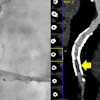
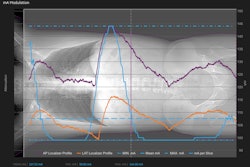
Using an AI algorithm for cervical spine (C-spine) fracture CT imaging could potentially yield increased sensitivity and specificity, but it also increased costs slightly due to more fractures being detected.
In an article published on 5 January in European Radiology, a team led by Dr. Gaby van den Wittenboer and Ingrid Nijholt, PhD, of the Department of Radiology and Nuclear Medicine at Isala Hospital in Zwolle, the Netherlands, examined an AI algorithm designed to assist in C-spine fracture detection as a triage tool.
The retrospective single-center early health tech assessment included 2,321 consecutive patients from 2007 to 2014 who had been scanned at the level-one trauma center for C-spine fractures using CT. Of these patients, 219 had C-spine fractures. The median age of the patients was 49; 61% were male. The most recent follow-up scans were reviewed as well, to include any false negatives.
Healthcare costs were calculated by diagnostic category (true positive, true negative, false positive, and false negative) based on the diagnosis made by the attending radiologists and by analysis using a deep learning-based AI algorithm; both were compared with the reference standard. The healthcare resource costs were calculated through matching reference codes to reference price lists derived from national average healthcare price estimates for 2015, 2017, and 2024.
The attending radiologists had correctly identified 193 of the 219 scans with fractures and 2,085 of the 2,102 scans without fractures; sensitivity was determined to be 88.1% (95% confidence interval [CI]: 82.9-92), and specificity was 99.2% (95% CI: 98.7-99.5). The algorithm correctly identified 177 of 219 scans with fractures and 2,065 of 2,102 scans without fractures; the AI’s sensitivity was 80.8% (95% CI: 74.8-85.7), and its specificity was 98.2% (95% CI: 97.6-98.7).
The radiologists identified 39 fractures that the algorithm missed, and 36 scans that were negative for fractures that AI misclassified as positive for fractures. The AI identified 23 fractures in scans that the radiologists missed, including all four undetected fractures with an indication for stabilizing therapy; it correctly identified 16 negative scans that had been misclassified as positive by the radiologists.
The total healthcare-resource cost for all categories with AI was €21.5 million for all categories, a €764 increase compared with the total costs for the radiologists.
In their analysis, the authors determined that if the radiologists were assisted by AI, the 23 out of 26 patients with fractures detected by AI but not detected by the radiologists would result in a maximum of 216 of 219 fractures that could have been detected. Moreover, if radiologists correctly classified the 16 out of 17 false-positive cases after reviewing the AI diagnoses, a maximum of 2,101 of 2,102 negative scans could have been identified. Therefore, a maximum sensitivity of 98.6% (95% CI: 95.7-99.6; a 10.5% increase over the sensitivity of the radiologists alone) and specificity of 100% (95% CI: 99.7-100; a 0.8% increase compared with the radiologists alone) could be attained.
The authors added that the increase in healthcare costs with the use of AI would be €60,862 (0.3%) due to more correct diagnoses. “In this scenario, which represents the highest possible increase in diagnostic yield, one misdiagnosis would be prevented per 58 CT scans evaluated with AI as concurrent reader, with an additional cost of €26 per patient due to increased healthcare resource use,” they wrote.
The costs of false positives and false negatives were also weighed. Each false negative resulted in underspending by €5,978; each false positive resulted in overspending of €4,821. A total of €73.5 was underspent for radiologists’ incorrect diagnoses; for AI, €72.7 was underspent. The increased sensitivity (10.8%) and specificity (0.8%) using AI also resulted in 0.3% higher in-hospital costs, attributable to increased costs due to more fractures being detected, they concluded.
Read the analysis on the European Radiology website.