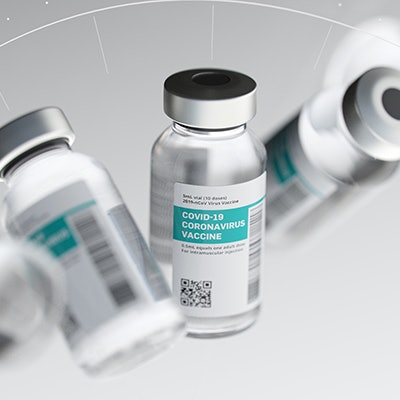
The U.K. Society of Radiographers (SoR) has released a position statement that strongly encourages members to get vaccinated but does not support mandatory COVID-19 vaccination for frontline healthcare staff.
The SoR said mandatory vaccinations could isolate and discriminate against those who have legitimate medical reasons for not being vaccinated. The organization also said it is "especially concerned" that mental health reasons, such as extreme anxiety, will not be recognized.
The SoR also said scientific evidence about the impact of flu vaccines versus the impact of COVID-19 vaccines in relation to reducing risk of contraction hasn't been taken into account, and that the "populist style" of the consultation document will generate confusion or undermine many members.
The society however noted it "strongly encourages" members to get vaccinated to reduce the risk to themselves and others in healthcare of falling seriously ill due to COVID-19.
You can read the full statement on the SoR website.










![Overview of the study design. (A) The fully automated deep learning framework was developed to estimate body composition (BC) (defined as subcutaneous adipose tissue [SAT] in liters; visceral adipose tissue [VAT] in liters; skeletal muscle [SM] in liters; SM fat fraction [SMFF] as a percentage; and intramuscular adipose tissue [IMAT] in deciliters) from MRI. The fully automated framework comprised one model (model 1) to quantify different BC measures (SAT, VAT, SM, SMFF, and IMAT) as three-dimensional (3D) measures from whole-body MRI scans. The second model (model 2) was trained to identify standardized anatomic landmarks along the craniocaudal body axis (z coordinate field), which allowed for subdividing the whole-body measures into different subregions typically examined on clinical routine MRI scans (chest, abdomen, and pelvis). (B) BC was quantified from whole-body MRI in over 66,000 individuals from two large population-based cohort studies, the UK Biobank (UKB) (36,317 individuals) and the German National Cohort (NAKO) (30,291 individuals). Bar graphs show age distribution by sex and cohort. BMI = body mass index. (C) After the performance assessment of the fully automated framework, the change in BC measures, distributions, and profiles across age decades were investigated. Age-, sex-, and height-adjusted body composition reference curves were calculated and made publicly available in a web-based z-score calculator (https://circ-ml.github.io).](https://img.auntminnieeurope.com/mindful/smg/workspaces/default/uploads/2026/05/body-comp.XgAjTfPj1W.jpg?auto=format%2Ccompress&fit=crop&h=112&q=70&w=112)


