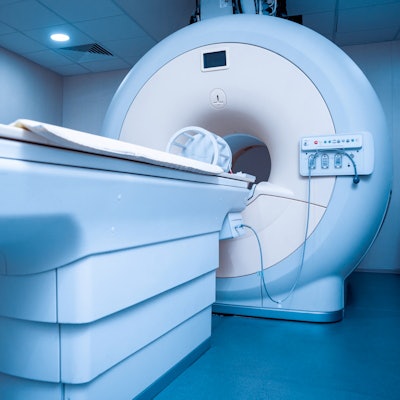
The Clinical Imaging Board (CIB) in the U.K. does not support self-referral for MRI exams or other diagnostic imaging, according to a position statement issued on 11 August.
An appropriate formal referral needs to be generated by a registered healthcare professional following the appropriate clinical assessment, the CIB noted. The result of the study, following its radiological interpretation, must then be sent to the referring professional so the result can be interpreted in the context of the overall clinical assessment.
This is important as any imaging study can give rise to unexpected findings, which may be of no consequence or may have serious implications, the statement continued.
The injection of MRI contrast is contraindicated in certain circumstances, and therefore requires proper clinical assessment prior to referral, vetting, and undertaking such examination, it said.
The CIB was established in September 2013 by the Royal College of Radiologists, the Society and College of Radiographers, and the Institute of Physics and Engineering in Medicine.






![Overview of the study design. (A) The fully automated deep learning framework was developed to estimate body composition (BC) (defined as subcutaneous adipose tissue [SAT] in liters; visceral adipose tissue [VAT] in liters; skeletal muscle [SM] in liters; SM fat fraction [SMFF] as a percentage; and intramuscular adipose tissue [IMAT] in deciliters) from MRI. The fully automated framework comprised one model (model 1) to quantify different BC measures (SAT, VAT, SM, SMFF, and IMAT) as three-dimensional (3D) measures from whole-body MRI scans. The second model (model 2) was trained to identify standardized anatomic landmarks along the craniocaudal body axis (z coordinate field), which allowed for subdividing the whole-body measures into different subregions typically examined on clinical routine MRI scans (chest, abdomen, and pelvis). (B) BC was quantified from whole-body MRI in over 66,000 individuals from two large population-based cohort studies, the UK Biobank (UKB) (36,317 individuals) and the German National Cohort (NAKO) (30,291 individuals). Bar graphs show age distribution by sex and cohort. BMI = body mass index. (C) After the performance assessment of the fully automated framework, the change in BC measures, distributions, and profiles across age decades were investigated. Age-, sex-, and height-adjusted body composition reference curves were calculated and made publicly available in a web-based z-score calculator (https://circ-ml.github.io).](https://img.auntminnieeurope.com/mindful/smg/workspaces/default/uploads/2026/05/body-comp.XgAjTfPj1W.jpg?auto=format%2Ccompress&fit=crop&h=112&q=70&w=112)


