Dear AuntMinnieEurope Member,
A major trend in radiology over recent years has been the emergence of Spain as a global player. This is confirmed by the high quality of research published in leading journals and presented at major congresses, particularly RSNA and ECR.
The work of a multidisciplinary team in Barcelona on the diagnosis of congenital heart disease is a case in point. A center dedicated to pediatric 3D models now exists at Hospital Sant Joan de Déu, and radiologists are collaborating with engineers and clinicians to make full use of the latest 3D printing, volume rendering, and 3D modeling techniques. The results are impressive. Find out more in our news report.
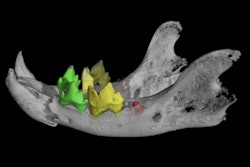
Judging by page-view numbers, many of you enjoy our regular updates on imaging of ancient Egyptian mummies. This week, a U.K. group published new findings on three animal mummies, and they're well worth a close look.
Our third new article this week in the Advanced Visualization Community is about how virtual reality can improve the experience of patients undergoing MRI. Researchers from King's College London have developed a system that shows promise for mitigating claustrophobia in patients receiving head MRI scans. In testing of nearly 30 adult and pediatric patients, all participants provided positive feedback on the immersive aspects of the system.
It's very difficult to spell out precisely what personal skills and qualities are needed to manage an MRI facility, but Prof. Pia Sundgren, PhD, attempted to do this in a keynote lecture at the end of the International Society for Magnetic Resonance in Medicine (ISMRM) virtual conference. Her analysis deserves your attention in the MRI Community.
In another visionary article from ISMRM 2020, Swiss expert David Brunner, PhD, got out his crystal ball and speculated on what the next generation of MRI systems would look like.
If you missed any of our coverage of ISMRM 2020, go to radcast.auntminnie.com to review all our news from the event.