
The medical imaging community in Egypt has paid tribute to Dr. Mushira Mahfouz Qudsy, head of radiology at Al-Mahalla Chest Hospital, whose death was announced last week.
Members of the country's WhatsApp group have left numerous messages about her, Dr. Sahar Saleem, a professor of neuroradiology in Cairo, told AuntMinnieEurope.com.
"Her friends write that she devoted her life to healthcare services. She didn't get married and considered her patients and junior colleagues to be her extended family," noted Saleem.
Dr. Mushira Mahfouz Qudsy retired from her hospital post around four years ago. The reported cause of death was acute cardiovascular failure. The Egypt Independent newspaper stated on 28 May that she died of COVID-19, but this has not been confirmed.


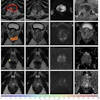







![Overview of the study design. (A) The fully automated deep learning framework was developed to estimate body composition (BC) (defined as subcutaneous adipose tissue [SAT] in liters; visceral adipose tissue [VAT] in liters; skeletal muscle [SM] in liters; SM fat fraction [SMFF] as a percentage; and intramuscular adipose tissue [IMAT] in deciliters) from MRI. The fully automated framework comprised one model (model 1) to quantify different BC measures (SAT, VAT, SM, SMFF, and IMAT) as three-dimensional (3D) measures from whole-body MRI scans. The second model (model 2) was trained to identify standardized anatomic landmarks along the craniocaudal body axis (z coordinate field), which allowed for subdividing the whole-body measures into different subregions typically examined on clinical routine MRI scans (chest, abdomen, and pelvis). (B) BC was quantified from whole-body MRI in over 66,000 individuals from two large population-based cohort studies, the UK Biobank (UKB) (36,317 individuals) and the German National Cohort (NAKO) (30,291 individuals). Bar graphs show age distribution by sex and cohort. BMI = body mass index. (C) After the performance assessment of the fully automated framework, the change in BC measures, distributions, and profiles across age decades were investigated. Age-, sex-, and height-adjusted body composition reference curves were calculated and made publicly available in a web-based z-score calculator (https://circ-ml.github.io).](https://img.auntminnieeurope.com/mindful/smg/workspaces/default/uploads/2026/05/body-comp.XgAjTfPj1W.jpg?auto=format%2Ccompress&fit=crop&h=112&q=70&w=112)


