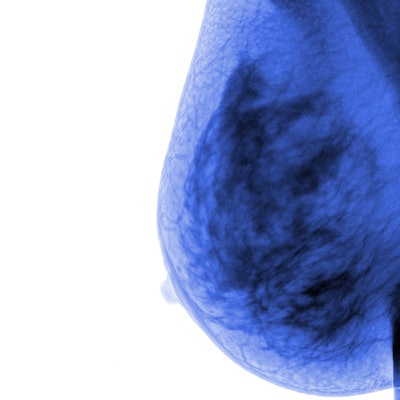
Mammography screening reduces the risk of dying of breast cancer by 41% within 10 years of diagnosis, according to a study published on 11 May in Cancer. The study attributes most of the mortality reduction to the impact of screening rather than advances in breast cancer therapy.
A team led by Stephen Duffy, PhD, and Dr. László Tabár examined a population of more than half a million women, covering approximately 30% of the screening-eligible population in Sweden, and compared women screened using mammography with those who were not. In addition to reducing breast cancer deaths, the researchers also found a 25% reduction in the incidence of advanced breast cancer.
 Dr. László Tabár.
"The results speak for themselves," said Tabár, a professor emeritus of radiology at Uppsala University in Sweden. "The 41% mortality decrease is above and beyond any effect modern therapeutic regimens might have had because the therapeutic regimens were following the same, uniform guidelines in both groups. The only difference between the two groups was participation or no participation in screening."
Mammography screening works
Commonly in observational studies, researchers face a methodological challenge: The mortality data apply to cancers diagnosed and treated during previous years, which may cover a broad time range. In that time, conditions around screening and neoadjuvant therapy could vary greatly from prevailing care in the year of death.
The current study led by Duffy, from the Center for Cancer Prevention's department of epidemiology, mathematics, and statistics at Wolfson Institute of Preventive Medicine in London, overcomes this challenge. He and his colleagues adopted a new endpoint: the incidence of breast cancer becoming fatal within 10 and 20 years after diagnosis (from the years 1992 to 2016). The new endpoint means death from breast cancer, exposure to mammography screening, and breast cancer treatment all belong to the same time period.
 Prof. Stephen Duffy, PhD.
In each diagnosis year, women who were screened for breast cancer and those who were not received treatment according to the same protocols appropriate for their stage of disease, the authors wrote.
"Thus, changes in therapy cannot account for the current study results," they added.
This study builds on previous research of a single county in Sweden that found a 60% lower incidence of fatal breast cancer within 10 years for women participating in screening compared with women who did not (Cancer, 15 February 2019, Vol. 125:4, pp. 515-523). With the new research, Duffy and colleagues sought to determine whether they would find similar results in a larger population; in this case, 549,091 women from nine counties.
In Sweden, women ages 40 to 54 are screened using two-view mammography every 18 months, and women ages 55 to 69 are screened every 24 months.
The researchers calculated the incidence rates of 2,473 breast cancers that were fatal within 10 years after diagnosis and the incidence rates of 9,737 advanced breast cancers. Data about breast cancer diagnosis, the cause of death, and the date of death were acquired from national registries. Regional cancer centers provided information about tumor characteristics.
Duffy and colleagues found a 41% reduction in fatal cancers within 10 years after diagnosis among screening participants and a 25% reduction in advanced breast cancer incidence. Advanced breast cancer was defined as invasive breast cancer measuring greater than 20 mm and/or four or more metastatic axillary lymph nodes.
The results are not altogether surprising because they are similar to those of the smaller Swedish study, Duffy and co-author Robert Smith, PhD, senior vice president of cancer screening at the American Cancer Society, told AuntMinnieEurope.com.
"However, the current study, observing more than half a million women over many years, leaves us in no doubt that screening has been effective in reducing the risk of death from breast cancer," they added.
In addition, the current study is in line with recent research from the U.K. and the Netherlands.
Will the study by Duffy and colleagues put an end to the breast cancer screening debate? In a word: no.
"There will always be arguments for or against a particular medical intervention," Duffy and Smith said via email. "Different individuals and different societies will have different healthcare priorities. However, the overwhelming majority of evidence from both experimental and observational studies indicates that screening works in reducing mortality from breast cancer. There is no coherent argument against screening on the basis of effectiveness .... The vast majority of cancer research and healthcare policy bodies continue to support screening for breast cancer, and these results provide further reassurance that this is the correct position."
However, the authors are quick to note portraying screening versus treatment as some sort of contest misses the essential point because both screening and treatment are important.
In terms of future research, Duffy and colleagues are planning more detailed investigation of patterns of screening exposure -- for example, serial participation at repeat screens.