Italy and Austria accounted for the most onsite delegates at ECR 2019, closely followed by Germany, according to detailed figures released on 7 March by the congress organizers. Overall, the meeting drew delegates from 133 countries and saw an attendance increase of 6%, the European Society of Radiology (ESR) has reported.
The event was the 25th held in Vienna since 1991. It hosted 30,259 delegates, both onsite and on the streaming platform, compared with 28,474 last year.
The society reported the following attendance statistics:
- Onsite participation was 23,239, including 14,602 professional delegates and 8,637 industry participants -- both 5% increases compared with ECR 2018.
- The ECR Online streaming platform counted 7,020 registered viewers, an increase of 9% from last year.
As for country demographics, Italy sent the most delegates, with Germany, the U.K., and Austria close behind.
| Top 10 ECR 2019 attendees by country | |||
| Country | Onsite attendees | Online viewers | Total |
| Italy | 1,246 | 312 | 1,558 |
| Germany | 1,039 | 383 | 1,422 |
| U.K. | 827 | 524 | 1,351 |
| Austria | 1,106 | 170 | 1,276 |
| Spain | 509 | 281 | 790 |
| Netherlands | 579 | 174 | 753 |
| Poland | 436 | 218 | 654 |
| Russian Federation | 378 | 247 | 625 |
| U.S. | 346 | 223 | 569 |
| France | 425 | 129 | 554 |
At the meeting, the Cube, a dedicated venue for interventional radiology, doubled in space compared with ECR 2018. The sessions offered were attended more than 1,200 times, for an increase of 50%, according to the ESR.
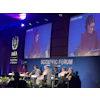
In addition, a new event called Women in Focus highlighted women in the healthcare industry and female leadership. It featured four sessions led by Dr. Lorenzo Derchi from the University of Genoa in Italy and Dr. Hedvig Hricak from Memorial Sloan Kettering Cancer Center in New York City.
More than 300 companies exhibited at the meeting, which also for the first time featured an area devoted to artificial intelligence (AI).
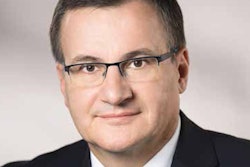
"Breaking the 30,000 attendance barrier at our 25th congress in Vienna is more than we could have ever asked for," Derchi said in a statement released by the ESR.