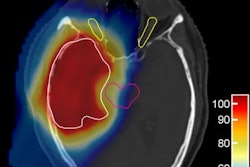
A 15-year-old boy with a rare brain tumor became the first patient to undergo treatment at the National Health Service (NHS) England's new proton beam therapy center at the Christie Hospital in Manchester, U.K., on 23 January.
NHS England provided 125 million euros for the center, which opened last year and is the first NHS proton beam treatment center in England. A second facility is scheduled to open at University College London Hospitals NHS Foundation Trust in the summer of 2020. Both centers are expected to each treat as many as 750 patients every year.
A number of other patients are set to undergo proton beam therapy at the Christie, while more patients are currently in the planning phase with medical staff to determine the start date for their first treatments.
Radiation oncology firm Varian Medical Systems was awarded the contract in 2017 to install its ProBeam proton therapy system at the Christie.
"It is vital that U.K. patients have access to this technology, which gives an internationally recognized standard of care for a particular range of rare cancers, most of which affect extremely young, vulnerable patients," said Dr. Jeanette Dickson, vice president of clinical oncology for the Royal College of Radiologists.






![Overview of the study design. (A) The fully automated deep learning framework was developed to estimate body composition (BC) (defined as subcutaneous adipose tissue [SAT] in liters; visceral adipose tissue [VAT] in liters; skeletal muscle [SM] in liters; SM fat fraction [SMFF] as a percentage; and intramuscular adipose tissue [IMAT] in deciliters) from MRI. The fully automated framework comprised one model (model 1) to quantify different BC measures (SAT, VAT, SM, SMFF, and IMAT) as three-dimensional (3D) measures from whole-body MRI scans. The second model (model 2) was trained to identify standardized anatomic landmarks along the craniocaudal body axis (z coordinate field), which allowed for subdividing the whole-body measures into different subregions typically examined on clinical routine MRI scans (chest, abdomen, and pelvis). (B) BC was quantified from whole-body MRI in over 66,000 individuals from two large population-based cohort studies, the UK Biobank (UKB) (36,317 individuals) and the German National Cohort (NAKO) (30,291 individuals). Bar graphs show age distribution by sex and cohort. BMI = body mass index. (C) After the performance assessment of the fully automated framework, the change in BC measures, distributions, and profiles across age decades were investigated. Age-, sex-, and height-adjusted body composition reference curves were calculated and made publicly available in a web-based z-score calculator (https://circ-ml.github.io).](https://img.auntminnieeurope.com/mindful/smg/workspaces/default/uploads/2026/05/body-comp.XgAjTfPj1W.jpg?auto=format%2Ccompress&fit=crop&h=112&q=70&w=112)


