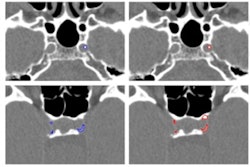
Radiologists at Bolzano Hospital in Italy performed a CT exam of the iceman known as ötzi and detected calcifications in the carotid artery and the arteries near the base of the skull, according to a report by Nachrichten.
ötzi is a mummy that archaeologists found frozen in the ötztal Alps in September 1991. It was not until 2013 that clinicians were able to acquire an adequate CT scan of ötzi's chest and head.
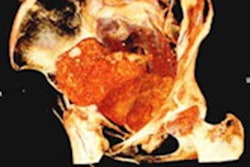
A recent analysis of the CT data published in RöFo disclosed calcifications in the chest, carotid artery, and various arteries of the skull base. The presence of arteriosclerotic plaques confirms ötzi's case as one of the oldest known incidents of vascular calcifications and also suggests the importance of genetic disposition as a trigger for coronary atherosclerosis, lead author Dr. Patrizia Pertner of Bolzano Hospital told Nachrichten.





![Overview of the study design. (A) The fully automated deep learning framework was developed to estimate body composition (BC) (defined as subcutaneous adipose tissue [SAT] in liters; visceral adipose tissue [VAT] in liters; skeletal muscle [SM] in liters; SM fat fraction [SMFF] as a percentage; and intramuscular adipose tissue [IMAT] in deciliters) from MRI. The fully automated framework comprised one model (model 1) to quantify different BC measures (SAT, VAT, SM, SMFF, and IMAT) as three-dimensional (3D) measures from whole-body MRI scans. The second model (model 2) was trained to identify standardized anatomic landmarks along the craniocaudal body axis (z coordinate field), which allowed for subdividing the whole-body measures into different subregions typically examined on clinical routine MRI scans (chest, abdomen, and pelvis). (B) BC was quantified from whole-body MRI in over 66,000 individuals from two large population-based cohort studies, the UK Biobank (UKB) (36,317 individuals) and the German National Cohort (NAKO) (30,291 individuals). Bar graphs show age distribution by sex and cohort. BMI = body mass index. (C) After the performance assessment of the fully automated framework, the change in BC measures, distributions, and profiles across age decades were investigated. Age-, sex-, and height-adjusted body composition reference curves were calculated and made publicly available in a web-based z-score calculator (https://circ-ml.github.io).](https://img.auntminnieeurope.com/mindful/smg/workspaces/default/uploads/2026/05/body-comp.XgAjTfPj1W.jpg?auto=format%2Ccompress&fit=crop&h=112&q=70&w=112)