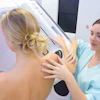
France's national union of independent radiologists (Fédération nationale de médecins radiologues FNMR) has unveiled a new television advertising campaign to promote breast cancer screening in tandem with Pink October, the country's national breast cancer awareness month.
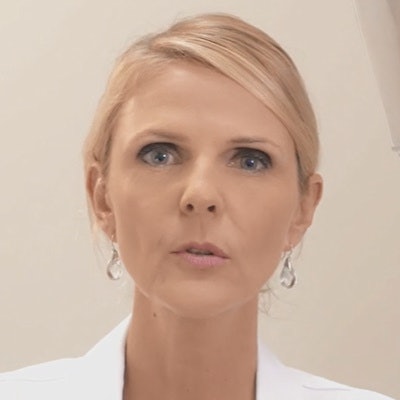
In a press conference on 5 October, the union aired its two 20-second adverts that will be shown seven times a day from 9 to 15 October on the channel BFM TV, the same week as the national radiology congress Journées Francophones de Radiologie (JFR 2017). The cost of the campaign is confidential. Each advert features one of two independent radiologists in a work setting, FNMR President Dr. Jean-Philippe Masson and Vice President Dr. Alexandra Coupteau.
 FNMR President Dr. Jean-Philippe Masson.
The script is simple and direct: Nine times out of 10, breast cancer that's detected at an early stage can be cured, so women should protect their health and get themselves screened. For women older than 50, screening is once every two years and free of charge. Masson and Coupteau urge women to make an appointment with an independent radiologist without delay.
According to the union, more than 2 million women in France are over the age of 50. This screening campaign responds to a direct request from the Minister of Health Agnès Buzyn for health professionals to promote preventative medicine. Furthermore, private radiologists, who provide 80% of organized breast cancer screening in France, have reported a drop in screening rates in certain regions.
FNMR also unveiled its finalized New Independent Medical Imaging (Nouvelle Imagerie Médicale Libérale, NIML) project, which after consultation with its members and the minister of health, has been upgraded from nine to 10 points.
This initiative was created in response to the difficulties imaging faces in France, according to the union.
Its 10 most urgent measures include the following:
 Vice President Dr. Alexandra Coupteau.
- Preserving regional imaging networks that promote local services and care
- Implementing permanent local breast cancer screening services
- Increasing MRI scanners from 12 to 20 per million inhabitants, in line with the European average
- Strengthening the trend toward ambulatory services through granting authorization for outsourced cross-sectional imaging and promoting interventional imaging
- Mainstreaming a quality-assurance approach (Labelix)
- Extending quality control to ultrasound
- Listing x-ray dose in patient health records
- Encouraging information sharing between public and private imaging sectors by setting up an effective Teleradiology Charter (G4-General Medical Council) and by rapidly implementing a unique patient identification number
- Reinvesting savings made in imaging back into the specialty
- Removing screening acts from imaging's budget
"We hope the minister of health will adopt some of our ideas in the next health conference that she wants to organize by the end of the year," Masson told AuntMinnieEurope.com.