After a prolonged battle, France's union of private radiologists (Fédération Nationale des Médecins Radiologues, FNMR) signed a three-year agreement over imaging prices on 26 April with the union of health insurers (Union Nationale des Caisses d'Assurance Maladie, UNCAM).
The deal will allow for reimbursement based on "exam pertinence," reapplication of a supplementary tariff for certain procedures (code Z), and the removal of article 99 from law so that tariffs are again controlled through the medical convention.
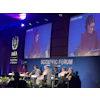
 Nicolas Revel (left), director general of UNCAM, and Dr. Jean-Philippe Masson, president of the FNMR. All images courtesy of the FNMR.
The settlement paves the way for better control of imaging costs without endangering the future of the discipline and also constitutes a first step toward removal of the controversial article 99 from the 2017 social welfare law (PLFSS 2017), according to FNMR President Dr. Jean-Philippe Masson. Article 99 gives the health insurers union the right to make unilateral decisions on reducing imaging tariffs. It is due for repeal in 2021, though this plan first must be ratified by the government.
In addition, this week's agreement also allows for the reapplication of code Z, a supplementary tariff removed in 2017 from the reimbursement of specific technical acts.
Speaking at a press conference held in Paris on 26 April, Masson pointed to how this agreement changed the dynamics of UNCAM's cost-curbing strategy, which until now has been based solely on reducing tariffs. The new agreement supports cost control through careful monitoring of the pertinence of imaging acts, particularly for back pain.


The map shows medical imaging facilities that have closed since 2012 as of February 2018. Image courtesy of the FNMR.
As co-author of the agreement, FNMR has pledged to avoid pointless and costly imaging exams. The radiology union, with its training partner Formation Continue en Imagerie Médicale (Forcomed), also will provide training sessions for general practitioners for tailoring exam requests, including MRI. The health insurers union, meanwhile, will provide patients with information on how acute back pain does not require imaging. The radiology union predicts that 60% of expected savings over 2018 and 2019 will come from exam pertinence predominantly targeting back pain.
In a statement released on Thursday, FNMR cited the removal of code Z from reimbursement policy as the trigger for the unprecedented strike in March 2017, and it pointed to how the policy had contributed to the closure of imaging centers across France (see map).
FNMR believes this deal is groundbreaking and could be rolled out to other disciplines, fundamentally changing the existing relationship between insurers and private practitioners.
"This agreement is important for the future of private radiology and all private medicine in France. For the first time the national health insurance office recognizes the pertinence of imaging acts, a new variable for improving exam quality and controlling health expenditure," noted Masson.
The radiology union particularly welcomes the return of reimbursement code Z applied to CT and conventional radiology exams, which it states, permits imaging centers to invest in expensive equipment to provide optimal patient care.
"This new deal between FNMR and UNCAM is win-win for all parties, to the benefit of patients. FNMR will be vigilant in its application," the union noted in its statement.