Dear CT Insider,
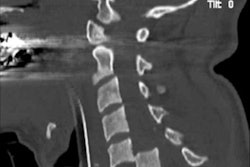
Demand is growing for emergency CT scans of the cervical spine following trauma, and because many of these examinations are performed at night or on weekends, often radiology trainees end up reporting them, according to new research from the U.K.
To speed up patient care and cut errors, the authors looked at how to improve training in this area, focusing on seven key learning points. Click here to find out more.
If an athlete at the Rio Olympics requires CT, the scan won't be conducted onsite because the organizers of the games decided against including a CT unit in the polyclinic. Presumably this decision was made due to cost and space considerations; the polyclinic in Rio occupies only 3,500 square meters, compared with 5,000 square meters at London 2012, where CT did feature. Get the full story here.
Everybody agrees CT guidance is vital for many interventional procedures, but opinion remains divided about whether interventional radiology should be a separate discipline. What's the view of Germany's new boss, Dr. Christian Stroszczynski? To learn more, click here.
European presenters excelled at the recent International Symposium on CT in San Francisco, and one of the speakers of note was Dr. Koen Nieman, PhD, from Rotterdam University Medical Center in the Netherlands. He presented cutting-edge research on the use of fractional flow reserve CT to assess the severity of coronary disease at CT angiography. Click here to read more.
Meanwhile, Willi Kalender, PhD, and his colleagues in Erlangen, Germany, have published a new study about breast CT. He's another top researcher you simply can't afford to ignore. Find out more here.
This letter outlines just a few of the many articles posted in your CT Community. For the full lineup, please check out the listing below.