Swiss and French researchers are investigating the use of hyperpolarized MRI contrast agents, which could have a wide range of applications.
Hyperpolarization involves injecting patients with substances that can increase imaging quality by following the distribution of specific molecules in the body, but that aren't harmful or potentially toxic to the patient.
A new generation of hyperpolarized contrast agents has been developed by a team of scientists from Swiss and French institutions; a paper on the work was published in the Proceedings of the National Academy of Sciences (PNAS) by a team led by Lyndon Emsley, a professor at Ecole Polytechnique Fédérale de Lausanne and école normale supérieure de Lyon.
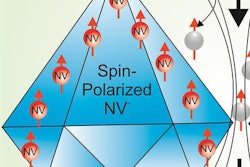
The substances, called HYPSOs, come in the form of a fine, white, porous powder that contains "tracking" molecules to be hyperpolarized. The powder is made up of mesoporous silica (silicon dioxide) -- the major component of sand, commonly used in nanotechnology.
The silica powder used for the HYPSOs is processed using microwave hyperpolarization, eventually producing a substance that can be injected into patients while they are in an MRI system.
Two MRI scans are performed -- one with and one without the hyperpolarized agent. When the two images are compared, it is possible to see the distribution of the hyperpolarized marker in the patient's body, which can be indicative of disease. For example, pyruvate accumulation in the prostate could be an early indication of prostate cancer.
The researchers tested the HYPSOs method on several imaging markers, including pyruvate, acetate, fumarate, pure water, and a simple peptide. Because the HYPSOs are physically retained during dissolution, the technique yields pure solutions of hyperpolarized markers, free of any contaminant, the researchers said.
The protocol is simpler and potentially safer for the patient, while its efficiency on signal quality forecasts the use of this new generation of hyperpolarized agents with a broad range of molecules, the researchers said.