Using MRI, researchers found less mature brain development and poorer executive functioning in young adult men who watched more violence on television, according to a study in the July issue of Brain and Cognition.
Researchers from Indiana University School of Medicine used psychological testing and MRI to measure mental abilities and the volume of brain regions in 65 healthy men with a normal IQ between the age of 18 and 29. The subjects were chosen specifically because they were not frequent video game players (Brain and Cognition, July 2014, Vol. 88, pp. 26-34).
The young men provided estimates of their television viewing over the past year, kept a detailed diary of their TV viewing for a week, and completed a series of psychological tests measuring inhibitory control, attention, and memory, according to lead author Tom Hummer, PhD, an assistant research professor in Indiana University's department of psychiatry. At the conclusion, MRI was used to measure brain structure.
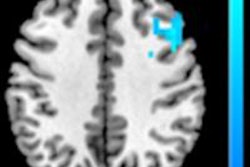
The more violent TV viewing a participant reported, the worse he performed on tasks of attention and cognitive control, Hummer and colleagues found. In addition, the brain MRI scans of men with more violent TV exposure showed less volume of white matter connecting the frontal and parietal lobes, which can be a sign of less maturity in brain development.
The key finding is the relationship between how much violent TV was watched and important aspects of brain functioning, such as controlled attention and inhibition, Hummer said.









![Overview of the study design. (A) The fully automated deep learning framework was developed to estimate body composition (BC) (defined as subcutaneous adipose tissue [SAT] in liters; visceral adipose tissue [VAT] in liters; skeletal muscle [SM] in liters; SM fat fraction [SMFF] as a percentage; and intramuscular adipose tissue [IMAT] in deciliters) from MRI. The fully automated framework comprised one model (model 1) to quantify different BC measures (SAT, VAT, SM, SMFF, and IMAT) as three-dimensional (3D) measures from whole-body MRI scans. The second model (model 2) was trained to identify standardized anatomic landmarks along the craniocaudal body axis (z coordinate field), which allowed for subdividing the whole-body measures into different subregions typically examined on clinical routine MRI scans (chest, abdomen, and pelvis). (B) BC was quantified from whole-body MRI in over 66,000 individuals from two large population-based cohort studies, the UK Biobank (UKB) (36,317 individuals) and the German National Cohort (NAKO) (30,291 individuals). Bar graphs show age distribution by sex and cohort. BMI = body mass index. (C) After the performance assessment of the fully automated framework, the change in BC measures, distributions, and profiles across age decades were investigated. Age-, sex-, and height-adjusted body composition reference curves were calculated and made publicly available in a web-based z-score calculator (https://circ-ml.github.io).](https://img.auntminnieeurope.com/mindful/smg/workspaces/default/uploads/2026/05/body-comp.XgAjTfPj1W.jpg?auto=format%2Ccompress&fit=crop&h=112&q=70&w=112)


