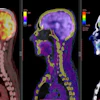
NEW YORK (Reuters Health), Dec 25 - Positron emission tomography (PET) following infusion of F-18 fluorodeoxyglucose (FDG) is an effective means of predicting response to neoadjuvant chemotherapy in patients with breast cancer, French researchers report in the December 1st issue of the Journal of Clinical Oncology.
Dr. Caroline Rousseau of Centre Rene Gauducheau, Saint Herblain, and colleagues note that changes in tumor metabolism take place before changes in tumor size. Studies have suggested that FDG uptake may reflect these changes sooner than is possible with other methods.
To investigate, the researchers studied stage II and II breast cancer patients who were receiving neoadjuvant chemotherapy. After administration of FDG, PET images were taken at baseline, and after the first, second, third, and sixth course of chemotherapy.
Surgery was performed after the sixth course and gross residual disease was seen in 28 patients. FDG standardized uptake values did not vary much in this group.
However, in 34 of the remaining 36 patients with minimal residual disease, values decreased markedly to background levels.
Using 60% of the baseline standardized uptake value as a cutoff point, the sensitivity of the approach was 61% after one course of chemotherapy, 89% after two, and 88% after three. Corresponding values for specificity were 96%, 95%, and 73% and for negative predictive value, 68%, 85%, and 83%.
This was considerable better than the results achieved using ultrasound or ultrasonography. In fact, assessment of tumor response using either of these modalities did reach significance regardless of the cutoff point chosen.
The researchers call for further studies, but observe that the approach can provide useful information on response as early as the second course of chemotherapy.
"Early information about tumor response," they conclude, "is extremely helpful in deciding the most appropriate therapeutic strategy."
Last Updated: 2006-12-22 13:00:13 -0400 (Reuters Health)
J Clin Oncol 2006;24:5366-5372.
Related Reading
Whole-body FDG-PET of little use in breast cancer staging, November 26, 2006
Copyright © 2006 Reuters Limited. All rights reserved. Republication or redistribution of Reuters content, including by framing or similar means, is expressly prohibited without the prior written consent of Reuters. Reuters shall not be liable for any errors or delays in the content, or for any actions taken in reliance thereon. Reuters and the Reuters sphere logo are registered trademarks and trademarks of the Reuters group of companies around the world.