The 39th EANM Congress opened with keynote insights from a Nobel Prize Museum curator who emphasized that scientific success requires more than individual brilliance—it demands effective collaboration, communication across disciplines, and breaking out of isolated professional silos to drive innovation and real-world impact.
- Nobel Prize Museum curator Tobias Degsell argued that Nobel Prizes celebrate collaborative achievement, not individual winners, citing analysis of 1,036 laureates
- Scientific expertise alone is insufficient without strong communication skills and ability to translate ideas into practical applications
- Breaking professional silos and diverse collaboration patterns are critical; the speaker warned against isolated communities, citing Brexit, Trump's election, and COVID-19 as examples of surprise developments
- EANM 2026 reported over 2,000 submitted abstracts, 200 young professionals in Next Gen program, and 10,000+ users on learning platform
- Alexandre Cochet received the €15,000 Marie Curie Award for the ESTROTIMP trial on fluoroestradiol PET/CT imaging in metastatic breast cancer
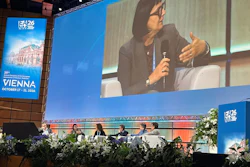
 Tobias Degsell, founder of Combiner AB in Stockholm, Sweden, drew on his analysis of 1,036 Nobel laureates to challenge conventional thinking about creativity and scientific collaboration.
The Nobel Prize, he argued, is about "making others winners." Degsell, founder of Combiner AB in Stockholm, Sweden, drew on his analysis of 1,036 Nobel laureates to challenge conventional thinking about creativity and scientific collaboration.
"It's not enough just to think different," he said. Ideas must also be put into practice. He cited the decades of research behind the Higgs boson as an example of scientific persistence.
"You can be super smart, but if you can't communicate to other people" what you want to achieve, he told delegates, scientific expertise may not be enough.
Breaking outside one's bubble
Degsell also warned against surrounding oneself with like-minded people, citing Brexit, Donald Trump's first election, and the COVID-19 pandemic as developments that caught many by surprise.
"We have created society with great islands, but we have forgot about the bridges," he said. Rather than fitting colleagues together like jigsaw pieces, each with a predetermined position, he suggested thinking of them as Lego bricks that can be combined in different ways.
Numbers and firsts

Her list had several firsts: an EANM event at the European Parliament with the European Society of Radiology (ESR), addressing the European Union's Safe Hearts Plan; Nuclear Medicine Day in Brussels with Nuclear Medicine Europe (NMEU); and the society's first podcast and congress jingle.
Next came 10 Inspire events encouraging secondary-school girls across Europe to pursue scientific careers.
More than 100 articles had been submitted to EANM journals in less than a year, Erba reported. The Next Gen program doubled its supported participation to 200 young professionals, while the society's learning platform exceeded 10,000 users. Erba also thanked the association's volunteers, estimating their contribution at "at least 10 million hours."
Dr. Valentina Garibotto of Geneva University Hospitals in Geneva, Switzerland, and chair of the EANM Scientific Events Council, reported more than 2,000 submitted abstracts, with China, Spain, and Germany contributing the most.
Marie Curie Award and Viennese waltz
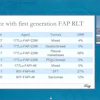
The €15,000 Marie Curie Award went to Dr. Alexandre Cochet of Centre Georges-François Leclerc in Dijon, France, for the ESTROTIMP trial investigating fluoroestradiol (FES) PET/CT in metastatic breast cancer.
The prospective, nonrandomized study enrolled 153 patients. Among 129 evaluable patients, FES PET/CT findings changed clinical management for 46 (35.7%). The study, sponsored by GE HealthCare, did not establish improved patient outcomes.
Cochet, who had prepared no slides, thanked his collaborators and "the 130 ladies" who accepted to participate.
The evening also included a Viennese touch when waltz tradition came to the stage with a string sextet and ballroom dancers.
The congress continues through 21 October at the Austria Center Vienna.
Our full coverage of EANM 2026 can be found here.