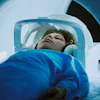
A patient slides out of the bore. The table stops. The examination is complete: images acquired, sequences logged, the next name already waiting on the worklist. "All done -- you can get dressed," the radiographer says, and turns back to the console. Two minutes later the room belongs to someone else.
Nothing in that sequence looks clinical. No measurement is taken, no protocol applies, no box goes unticked -- it reads as pure administrative closure, the dead time between one examination and the next. It is exactly the kind of moment a busy department is built to compress.
 Giuseppe Scappatura of the Grande Ospedale Metropolitano Bianchi Melacrino Morelli in Reggio Calabria, Italy.Giuseppe Scappatura
I argue it is nothing of the kind. Those two minutes are one of the most clinically significant intervals in the whole encounter, and -- not by coincidence -- the one part of our work that no algorithm will ever take from us. But to see why an apparently empty gap should carry that weight, you have to know what the patient was doing for the previous half hour -- and what state they are still in when the table brings them back out.
What happens inside the bore
A modern MRI examination places a person in conditions that exist almost nowhere else in routine healthcare: enforced immobility; acoustic levels that, in gradient-intensive sequences, routinely exceed 100 dB(A); spatial confinement; and underneath all of it, the awareness that this machine is looking for something, and may find it.
Every ordinary strategy a human being uses to manage distress -- movement, conversation, distraction -- must be avoided. And no one is with the patient. In the bore, the person is entirely alone.
I have come to call what happens in an imaging exam a "life-film" experience, that is, an involuntary, biographical replay of memories, relationships, and even regrets set in motion not by the imaging tube itself but by the fear of mortality that diagnostic uncertainty makes suddenly real. Older patients, in my own observation, sometimes recite the rosary inside the bore. Time stops behaving normally. And many patients, privately, strike a kind of bargain -- with God, with fate, with themselves -- about how they will live if the news is good.
None of this is visible from the console. The patient who lies perfectly still and says nothing is not necessarily calm. Compliance and inner state are poorly correlated in medicine; people suppress visible distress precisely because the clinical environment asks them to.
Why this is not a question of comfort
Dealing with patient anxiety is often considered an extra kindness that technologists address if there is time. But this isn't the best way to consider the task. Anxiety is not "just" a mood, it's a measurable physiological state during which a perceived threat activates the amygdala, which drives sympathetic and HPA-axis output. And the state is responsive to human relational presence: a calm voice and genuine attention prompt oxytocin release and prefrontal regulation that dampen amygdala reactivity.
So the radiographer's words are not courtesy laid over the clinical work. They are physiologically active; they are part of it. And if that is true during the examination, it is true at the moment the patient comes out of it -- when that physiological state is still elevated, and still movable.
Crucial moments
Which brings us back to the patient emerging from the bore.
For roughly 25 to 30 minutes, the patient has been in a liminal place that strips away the ordinary coordinates of a day. The person has not yet reentered normal time. The time between the completion of the exam and the walk back to the waiting room is a window of unusual psychological permeability. A single question asked with real attention, an acknowledgement that names the end of the examination and restores a sense of forward motion, accomplishes something that its brevity completely disguises. It is not counseling but is instead the difference between a patient who leaves having been seen and one who leaves carrying the emotional residue of the scan into every clinical encounter that follows -- including, for some, the decision about whether to come back for the next one.
Returning a patient to the waiting room without acknowledging the exam experience is not a neutral act. It is a clinical omission with measurable downstream consequences.
The one thing automation cannot do
AI now matches or exceeds expert performance in detecting pulmonary nodules, intracranial hemorrhage, breast lesions. Technical workflow is being automated, and that trend is not reversing.
But current and foreseeable AI can do precisely nothing for the person lying inside the scanner confronting the possibility of serious illness. The neurobiology that quiets a frightened patient -- oxytocin, prefrontal regulation of the amygdala, the parasympathetic settling that comes from another human being's presence -- is activated by relational contact, not by algorithmic output. This is a structural limitation, not a sentimental one.
So as automation absorbs more of the technical task, the relational dimension of the radiographer's role is not diminished. In fact, it is clarified, revealed as the profession's defining clinical contribution, the part that has always been irreducibly ours.
Recognize, train, protect
There are three moments in every imaging encounter where this matters most: the preparatory conversation before the scan, brief contact between sequences during it, and the two minutes of emergence afterward. The first two are at least intuitively understood. The third -- the post-examination window -- is the one no protocol recognizes, no guideline structures, and no curriculum teaches.
All three should be recognized as a structured therapeutic window, protected from workflow pressure and trained as a professional competency on the same footing as the technical skills we already certify.
Radiography has developed technical excellence for more than a century. The next step in the profession's maturity is to take the patient's inner world as seriously as we take image quality -- and to understand that, at the moment the table stops moving, the examination is not actually over.
Giuseppe Scappatura is a radiology technician at the Grande Ospedale Metropolitano Bianchi Melacrino Morelli in Reggio Calabria, Italy.
The comments and observations expressed are those of the author and do not necessarily reflect the opinions of AuntMinnieEurope.com.