Integrated diagnostics—coordinating existing imaging, pathology, and molecular testing processes—can dramatically reduce treatment delays without requiring new technologies. One hospital reduced median time from initial presentation to cancer treatment from 14 days to 3 days by improving coordination across radiology, pathology, molecular testing, and administrative processes.
- Massachusetts General Hospital reduced median treatment time from 14 days to 3 days through integrated diagnostic pathways, with some patients starting treatment the same day
- Integrated diagnostics combines imaging, tissue analysis, molecular findings, and clinical information from multiple specialties into coordinated decision-making
- AI can accelerate treatment by initiating insurance preauthorization before confirmatory results, reducing administrative delays without allowing predictions alone to determine care
- Shadow deployment allows AI systems to operate alongside clinical workflows for continuous evaluation, monitoring accuracy and detecting performance changes before routine implementation
- Regulatory frameworks and healthcare system integration capabilities are as critical as technological innovation for advancing diagnostic efficiency
Few fields generate as much data as healthcare, and the prospect of generating even more through new technologies and artificial intelligence (AI) is tempting. Yet sometimes the most promising opportunities lie in what is already available.
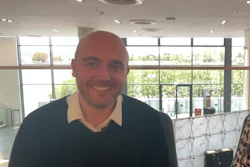
The future of data-driven diagnostics lies in connecting existing technologies, clinical specialties, and healthcare processes more effectively, says molecular pathologist and physician-scientist Joe Lennerz
Speaking at neuroRAD 2026 in Mainz during his keynote, "Quo Vadis? The Future of Data-Driven Diagnostics," he argued that better coordination could substantially accelerate treatment decisions without requiring new diagnostic technologies.
An integrated diagnostic pathway at Massachusetts General Hospital reduced the mean time from an oncologist's initial order to the start of targeted cancer treatment by nearly 80%, from 12.6 to 2.7 days, according to a 2024 study published in Radiology and coauthored by Lennerz.
The study compared 285 patients managed through the integrated pathway with 6,107 historical comparator patients. The improvement did not result from a new scanner, molecular assay, or diagnostic technology. Instead, it came from coordinating radiology, pathology, molecular testing, and administrative processes more efficiently.
Connecting diagnostic disciplines
A typical diagnostic pathway involves multiple examinations across different specialties, each producing separate reports that clinicians must interpret and combine before determining the appropriate treatment.
Integrated diagnostics aims to connect these processes, bringing together imaging, tissue analysis, molecular findings, and clinical information to support faster decisions.
Lennerz visualized this through the case of a 58-year-old woman whose neurological symptoms led to the discovery of a brain lesion. A subsequent biopsy identified metastatic breast cancer, while molecular testing revealed HER2 amplification, providing information relevant to targeted therapy.
The case raised a fundamental question: Which specialty actually made the diagnosis?
Imaging, pathology, and molecular testing each contributed essential information, demonstrating how diagnostic value emerges from the combination of different disciplines rather than a single examination.
Accelerating treatment without making treatment decisions
One particularly promising application, according to Lennerz, involves using AI predictions to initiate administrative procedures before confirmatory diagnostic results become available.
In the integrated pathway, an AI-based prediction of a molecular characteristic could trigger insurance preauthorization for a potential therapy. Treatment would only proceed once molecular testing confirmed the relevant finding.
This approach could reduce administrative delays without allowing AI predictions alone to determine treatment.
Shadow deployment and continuous evidence
Lennerz also mentioned shadow deployment as a strategy for evaluating AI systems before their introduction into routine clinical practice.
In this approach, an algorithm operates alongside established clinical workflows without influencing patient management. Its predictions are compared with subsequent diagnostic results, allowing institutions to monitor accuracy, identify performance changes, and detect data drift.
Rather than relying exclusively on one-time validation, AI systems could be evaluated continuously using evidence generated during routine clinical care.
Lennerz also addressed the growing importance of regulatory science. While AI technologies evolve rapidly, clinical implementation and regulatory frameworks often move at considerably slower speeds.
He argued that researchers should consider the regulatory and policy implications of their findings and contribute evidence that could inform future rules.
For radiology and pathology, the future of diagnostics may therefore depend not only on more sophisticated technologies but also on healthcare systems capable of integrating, evaluating, and governing them effectively.
Our full coverage of neurorad 2026 can be found here.