Quibim has completed a series A financing round worth $50 million (€47.9 million).
With operations in Spain, the U.K., and the U.S., the company said the investment will allow it to establish a stronger U.S. presence, building on its success in Europe, through strategic collaborations with hospitals and pharmaceutical companies.
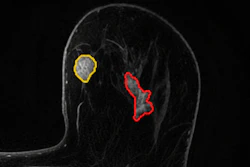
Quibim has been developing human digital twin technology at the organ and lesion level, as well as AI models designed to extract actionable insights from MRI, CT, and PET scans. However, as the volume of whole-body scans and related imaging data continues to grow, in the coming years the main goal is to analyze the entire body, the company noted.
Quibim's QP-Prostate, QP-Brain, QP-Liver, and QP-Insights are cleared for use in the European Union and the U.K. through the CE and UKCA marks, and QP-Insights is already in use as part of the European Cancer Imaging Initiative to support Europe’s Beating Cancer Plan.
Asabys and Buenavista Equity Partners led this round of financing. UI Investissements and GoHub Ventures were noted as new investors. Others included Amadeus Capital Partners, APEX Ventures, Partech, Adara Ventures, and Leadwind, as well as individual investors.



![A normal mammogram confirmed by three-year radiologic follow-up illustrates reader-marked regions of interest (ROIs) during (A) unaided (round 1) and (B) artificial intelligence (AI)–assisted (round 2) reading. Each colored dot represents an ROI for recall by a human reader. Readers could mark more than one ROI per case, represented by multiple dots of the same color. During AI-assisted reading, the AI system displayed three visible prompts: two with suspicion of malignancy scores of 35% (left mediolateral oblique [L MLO] and craniocaudal [L CC]) and one with a suspicion of malignancy score of 10% (right craniocaudal [R CC]), shown as polygonal overlays. Without AI, six of 10 readers (60%) marked a false-positive ROI. With AI assistance, this fell to two of 10 (20%). R MLO = right mediolateral oblique.](https://img.auntminnieeurope.com/mindful/smg/workspaces/default/uploads/2026/07/2026-07-14-radiology-mammogram-ai-auto-bias.H0bYO8QlWs.jpg?auto=format%2Ccompress&fit=crop&h=100&q=70&w=100)


![A normal mammogram confirmed by three-year radiologic follow-up illustrates reader-marked regions of interest (ROIs) during (A) unaided (round 1) and (B) artificial intelligence (AI)–assisted (round 2) reading. Each colored dot represents an ROI for recall by a human reader. Readers could mark more than one ROI per case, represented by multiple dots of the same color. During AI-assisted reading, the AI system displayed three visible prompts: two with suspicion of malignancy scores of 35% (left mediolateral oblique [L MLO] and craniocaudal [L CC]) and one with a suspicion of malignancy score of 10% (right craniocaudal [R CC]), shown as polygonal overlays. Without AI, six of 10 readers (60%) marked a false-positive ROI. With AI assistance, this fell to two of 10 (20%). R MLO = right mediolateral oblique.](https://img.auntminnieeurope.com/mindful/smg/workspaces/default/uploads/2026/07/2026-07-14-radiology-mammogram-ai-auto-bias.H0bYO8QlWs.jpg?auto=format%2Ccompress&fit=crop&h=112&q=70&w=112)