Dear Women's Imaging Insider,
Artificial intelligence (AI) has made particularly impressive progress in breast imaging, and this point was underlined in an intriguing presentation made recently at Australia's largest radiology congress.
The study pulled on 2021 data gathered at a breast screening facility in Hungary, and several European experts were involved in the project. Check out the group's findings in today's top article.
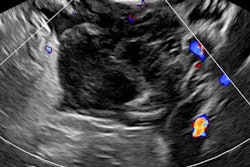
Have you ever come across a case of heterotopic pregnancy? Quite possibly not, but it's essential to be aware of this rare condition that involves a simultaneous intrauterine and extrauterine pregnancy because it has the potential for significant morbidity and mortality, researchers say. Find out more in our report.
Just five minutes of exposure to music can improve a woman's experience of mammography, translating to less reported pain during compression, according to new research from the U.K. The introduction of music prior to mammography could be a low-risk, low-cost intervention for certain patients, the study authors pointed out.
Another U.K. research team has shown that ovarian cancer surveillance is a viable option for women with BRCA gene variants and who delay removal of the fallopian tubes and ovaries. The group thinks a predictive algorithm that involves transvaginal ultrasound may be a suitable bridge for women in this subgroup who want to keep an eye on risk developments but also delay surgery.
Last but not least, a new study has found that an AI model was highly accurate in identifying lesion subtypes such as invasive lesions and ductal carcinoma in situ in breast images taken of Israeli and U.S. women. The ultimate aim of the developers is to reduce biopsy sampling errors and decrease costs associated with false-positive findings.
In this letter, we've highlighted a small selection of the numerous articles posted in the Women's Imaging Community over recent weeks. Please take a close look at the full list below, and feel free to contact me if you have ideas for future coverage.