Nvision Imaging Technologies and Aarhus University have received a €5.4 million (40 million Danish kroner) grant from Innovation Fund Denmark to advance clinical translation of hyperpolarized MRI for liver cancer diagnostics.
The funding, awarded under Denmark’s Grand Solutions in Quantum Technologies program, supports the MIRAQLE project, which aims to develop an MRI platform capable of visualizing cancer metabolism by boosting the MRI signal of an imaging agent, the partners said.
The MIRAQLE project, which will span laboratory research through preclinical and clinical studies in hepatocellular carcinoma, builds on Nvision's existing research collaborations at Memorial Sloan Kettering Cancer Center and the University of Cambridge Department of Radiology, with a dedicated focus on liver cancer.
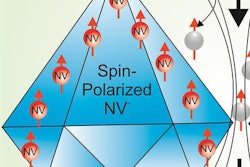
Nvision's quantum physics-based hyperpolarization technology, Polaris, is under development for integration into existing MRI infrastructure at hospitals, according to the partners. Scanning with Polaris does not use radiation, they added.





![Overview of the study design. (A) The fully automated deep learning framework was developed to estimate body composition (BC) (defined as subcutaneous adipose tissue [SAT] in liters; visceral adipose tissue [VAT] in liters; skeletal muscle [SM] in liters; SM fat fraction [SMFF] as a percentage; and intramuscular adipose tissue [IMAT] in deciliters) from MRI. The fully automated framework comprised one model (model 1) to quantify different BC measures (SAT, VAT, SM, SMFF, and IMAT) as three-dimensional (3D) measures from whole-body MRI scans. The second model (model 2) was trained to identify standardized anatomic landmarks along the craniocaudal body axis (z coordinate field), which allowed for subdividing the whole-body measures into different subregions typically examined on clinical routine MRI scans (chest, abdomen, and pelvis). (B) BC was quantified from whole-body MRI in over 66,000 individuals from two large population-based cohort studies, the UK Biobank (UKB) (36,317 individuals) and the German National Cohort (NAKO) (30,291 individuals). Bar graphs show age distribution by sex and cohort. BMI = body mass index. (C) After the performance assessment of the fully automated framework, the change in BC measures, distributions, and profiles across age decades were investigated. Age-, sex-, and height-adjusted body composition reference curves were calculated and made publicly available in a web-based z-score calculator (https://circ-ml.github.io).](https://img.auntminnieeurope.com/mindful/smg/workspaces/default/uploads/2026/05/body-comp.XgAjTfPj1W.jpg?auto=format%2Ccompress&fit=crop&h=112&q=70&w=112)


