Dear AuntMinnieEurope Member,
As any sports fan knows only too well, this is a vintage summer. The Euros football, Wimbledon tennis, and Open golf championships all reach a climax within the next month and then comes the biggest event of them all: the Olympics.
To kick off our coverage of Paris 2024, we have an exclusive interview with Dr. Jérôme Renoux, the musculoskeletal radiologist and sports imaging expert. His team looks set to be kept extremely busy in the polyclinic. We'll have further updates on their work in the weeks ahead.
When it comes to radiation protection practices of interventional radiology and cardiology catheter laboratory staff, there's a serious lack of evidence in the literature, an Irish-led research group has pointed out. Its in-depth European study attempts to fill in the gaps.
Also this week, we've covered an important new analysis about how MRI shows women who have their ovaries removed before menopause have reduced white matter integrity in multiple regions of the brain later in life. Get the full details in our report.
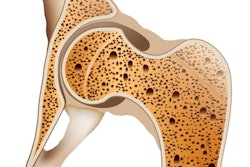
Finally, we have two articles about dual-energy x-ray absorptiometry. In the first study, researchers from the University of Lorraine in France identified higher rates of osteoporosis in patients two years after bariatric surgery. In the second study, a team from Deakin University in Geelong, Australia, found lower bone mineral density in people with schizophrenia.
Philip Ward
Editor in Chief
AuntMinnieEurope.com







![Overview of the study design. (A) The fully automated deep learning framework was developed to estimate body composition (BC) (defined as subcutaneous adipose tissue [SAT] in liters; visceral adipose tissue [VAT] in liters; skeletal muscle [SM] in liters; SM fat fraction [SMFF] as a percentage; and intramuscular adipose tissue [IMAT] in deciliters) from MRI. The fully automated framework comprised one model (model 1) to quantify different BC measures (SAT, VAT, SM, SMFF, and IMAT) as three-dimensional (3D) measures from whole-body MRI scans. The second model (model 2) was trained to identify standardized anatomic landmarks along the craniocaudal body axis (z coordinate field), which allowed for subdividing the whole-body measures into different subregions typically examined on clinical routine MRI scans (chest, abdomen, and pelvis). (B) BC was quantified from whole-body MRI in over 66,000 individuals from two large population-based cohort studies, the UK Biobank (UKB) (36,317 individuals) and the German National Cohort (NAKO) (30,291 individuals). Bar graphs show age distribution by sex and cohort. BMI = body mass index. (C) After the performance assessment of the fully automated framework, the change in BC measures, distributions, and profiles across age decades were investigated. Age-, sex-, and height-adjusted body composition reference curves were calculated and made publicly available in a web-based z-score calculator (https://circ-ml.github.io).](https://img.auntminnieeurope.com/mindful/smg/workspaces/default/uploads/2026/05/body-comp.XgAjTfPj1W.jpg?auto=format%2Ccompress&fit=crop&h=112&q=70&w=112)


