Prof. Minerva Becker from Geneva, Switzerland, has won the keenly contested ballot to become president of the European Society of Radiology (ESR) in 2025. Other winners in the election results announced on 6 June were Prof. Marie-Pierre Revel from Paris, Maija Radzina, M.D., from Riga in Latvia, Prof. Emanuele Neri from Pisa in Italy, and Nuria Bargalló, M.D., from Barcelona in Spain.
In the race to become ESR second vice-president, Becker, who is chief of head and neck and maxillofacial radiology at Geneva University Hospitals, recorded 2990 votes. The other contender, Prof. Jacob Sosna from Jerusalem, Israel, clocked 1119 votes.
This means she will take over as ESR president in July 2025 and president of ECR 2026, following in the footsteps of Prof. Carlo Catalano from Rome and Prof. Andrea Rockall from London.
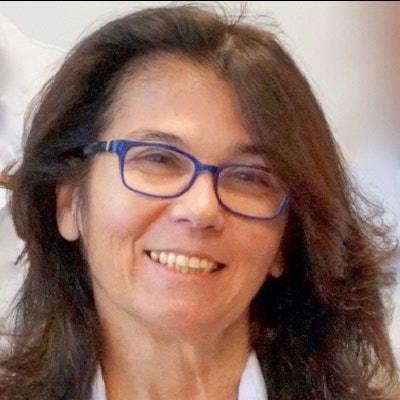
 Prof. Minerva Becker.
Revel, who was voted the Most Effective Radiology Educator in the 2023 EuroMinnies awards, will become the ESR's communication and external affairs committee chair, taking office on 18 July 2023. She received 2577 votes, compared with 1508 cast for Prof. Apostolos Karantanas from Heraklion, Greece.
In the vote for the ESR's finance and internal affairs committee chair, Radzina recorded 2459 votes, against 1415 for Prof. Nikoleta Traykova from Plovdiv, Bulgaria.
Neri will become the ESR's quality, safety, and standards committee chair. He received 1705 votes. In second place with 1447 votes was Helmut Prosch, M.D., from Vienna.
In the ballot for ESR's subspecialties and allied sciences societies committee chair, Bargalló clocked 1712 votes, compared with 1218 for Anagha Parkar, M.D., from Bergen, Norway, and 1089 for Prof. Elmar Kotter from Freiburg, Germany.
Of the 27,551 ESR members eligible to vote, 4336 voted, representing a turnout of 15.73%. In the January 2021 ESR election, voter turnout reached an all-time high at 16.7% of eligible members.
The full results of the elections are available on the ESR website.