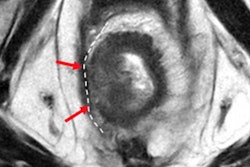
CHICAGO - An abbreviated MRI protocol combined with contrast-enhanced CT performs comparably to a standard MRI exam for identifying liver metastases in colorectal cancer patients, according to research presented on 30 November at the RSNA meeting.
The findings are good news for colorectal cancer patients with liver metastases, presenter Dr. Francesca Castagnoli of the Royal Marsden Hospital in London, U.K., noted. "The use of the abbreviated protocol can reduce imaging time without sacrificing diagnostic performance for the baseline study of the liver in colorectal cancer patient."
Colorectal cancer is one of the most common around the world, and half of patients with the disease develop liver metastases, she explained. The only curative treatment for these metastases is surgery, and gadoxetate-enhanced MRI, in combination with contrast-enhanced CT, is often used for surgery staging. But access to MRI can be problematic, due to exam length, which is why an abbreviated protocol could be useful.
Castagnoli and colleagues conducted a study that compared a standard gadoxetate liver MRI protocol (set 1) to an abbreviated gadoxetate liver MRI protocol plus a contrast-enhanced CT exam (set 2). The research included 75 patients with 245 liver metastases and 122 benign liver lesions. Standard exam acquisition time was 35 to 45 minutes, while abbreviated exam acquisition time was less than 15 minutes. Patients were included in the study if they had histologically proven colorectal cancer, had undergone contrast-enhanced CT and gadoxetate-enhanced MRI within three weeks of the CT exam, and had no other serious disease.
The researchers found that the abbreviated MRI protocol showed comparable efficacy for identifying liver metastases compared to the standard protocol.
| Comparison of two protocols for identifying liver metastases | ||
| Measure (mean) | Set 1 (standard MRI protocol) | Set 2 (abbreviated MRI protocol plus contrast-enhanced CT) |
| Diagnostic accuracy | 96% | 96.7% |
| Positive predictive value | 87.6% | 91.7% |
| Sensitivity | 96.1% | 96% |
The group also found that intraobserver agreement (measured as interclass correlation, or ICC) between the two protocols was 0.97 and interobserver agreement was 0.98 (with 1 as reference), and they also noted high agreement among readers for identifying benign lesions, at 0.96.
The results suggest that there's a way to identify liver metastases before surgery that could be less burdensome for patients, Castagnoli told session attendees.
"An abbreviated MRI protocol could potentially be implemented at a lower cost and a shorter examination time than a standard gadoxetate MRI," she said.