France's national radiology society (Société Française de Radiologie, SFR) has announced that six teams of radiologists will present their designs of an emergency toolkit for interventional radiology procedures during the French national radiology congress, Journées Francophones de Radiologie (JFR 2022).
The project is part of the Mars Interventional Radiology Toolbox (MITBO) Challenge launched at JFR 2021 in partnership with France's national Center for Space Studies (CNES).
The team with the most versatile toolbox will win a grant and a trip to CNES, and at the end of this challenge, a specific working group will be formed with the best French interventional radiologists interested in this field.
This group will generate a short-term proposal for two areas:
- Training astronauts in specific interventional radiology (IR) procedures.
- Elaborating the final version of the toolbox with the potential creation of new tools in partnership with preexisting industrial collaborations.
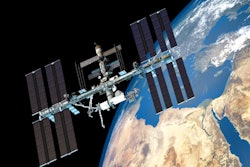
During distant space travel, in particular for the MARS mission, medical problems will have to be managed in autonomy with small and versatile equipment, the SFR stated on 22 September. The impossibility of heavy surgery and direct interaction with the Earth will also limit the management of many pathologies. Interventional radiology is, by definition, a specialty that responds to several of these issues, including access to deep organs under ultrasound guidance.
The teams that are developing the IR toolbox for distant space travel have had to ensure the technical realization of specific interventions while minimizing the volume and weight of medical devices and instruments and describe new IR interventions for space to respond to pathologies that on earth are treated surgically through procedures such as tracheotomy, for example.
The MITBO Challenge Award will be presented on Saturday, 8 October at 15:00 Central European Time in the Interventional Radiology Village of the JFR.