Ever since 2011, when the European Diploma in Radiology (EDiR) was created, the commitment by the European Board of Radiology (EBR) has been to provide all radiologists in training with the possibility of obtaining a certificate of excellence.
The EBR now offers to residents, education facilities, training program coordinators, and individual trainees the option of taking remote, virtual evaluations for an assessment of their training progress before taking the certification exam at the end of their residency.
 This large exam session took place in Cairo in October 2021. Figures courtesy of the EBR
The EDiR training evaluation scheme has been created by experts from all the subspecialties of radiology. It is aimed at residents from second to fourth year in order to assess the training acquired according to what is established in level I of the European Society of Radiology's European Training Curriculum for Radiology.
The evaluation has a duration of 150 minutes, and it consists of 100 multiple response questions and 10 short cases. Thanks to the EDiR examination software, it will be offered online to guarantee secure proctored evaluations with accurate benchmarks.
 The chart shows how the training evaluation scheme will work.
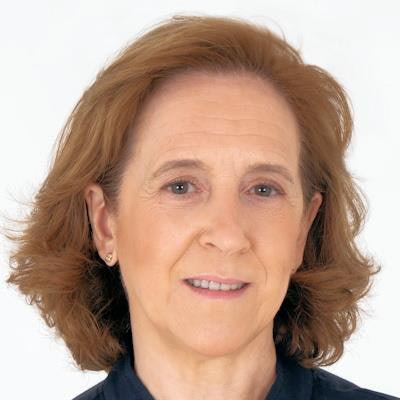
 Prof. Dr. Laura Oleaga, PhD. Image courtesy of the ESR.
Anonymity is always preserved and protected. Candidates will obtain a certificate of attendance and will receive immediate results and detailed information about their performance via email. An anonymized global evaluation will be provided to the centers and education coordinators who wish to carry out an evaluation of their residents.
This voluntary evaluation offers residents the opportunity to assess their knowledge -- as is the case with other educational tools such as the EDiR simulation and webinars or the EDiR self-assessment tests -- and identify areas of deficiency.
The first EDiR Training Evaluation will be held in April 2022, and it will be offered to residents and to centers as a training program package.
For more information, go to the EBR website, or please contact [email protected]
The comments and observations expressed are those of the author and do not necessarily reflect the opinions of AuntMinnieEurope.com.
Prof. Dr. Laura Oleaga, PhD, is chair of radiology at the Hospital Clinic of Barcelona, Spain, and scientific director of the EDiR.