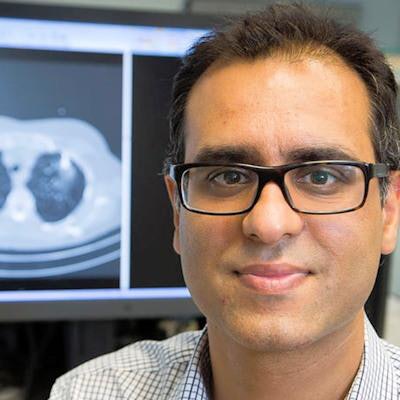
Organizing diagnostic imaging services into networks and sharing digital images is critical to solving radiography's workload and recruitment problems, according to Dr. Sam Hare, who spoke on the issue at the U.K. National Conference for Radiology Managers 2021 virtual meeting.
Dr. Sam Hare.Hare, the national specialty adviser for imaging at National Health Service (NHS) England, said recent reports on NHS diagnostic services recommend the launch of community diagnostic hubs across the country, the expansion of the imaging workforce by 4,000 radiographers, a doubling of CT scanning capacity, and an equipment renewal program.
"Workforce is probably our biggest challenge. It's very difficult to recruit 4,000 human beings. We need to work better with the resources we have. We need to use them more effectively," Hare said in a press release about the event, which was organized by the Society of Radiographers and Philips.






![Overview of the study design. (A) The fully automated deep learning framework was developed to estimate body composition (BC) (defined as subcutaneous adipose tissue [SAT] in liters; visceral adipose tissue [VAT] in liters; skeletal muscle [SM] in liters; SM fat fraction [SMFF] as a percentage; and intramuscular adipose tissue [IMAT] in deciliters) from MRI. The fully automated framework comprised one model (model 1) to quantify different BC measures (SAT, VAT, SM, SMFF, and IMAT) as three-dimensional (3D) measures from whole-body MRI scans. The second model (model 2) was trained to identify standardized anatomic landmarks along the craniocaudal body axis (z coordinate field), which allowed for subdividing the whole-body measures into different subregions typically examined on clinical routine MRI scans (chest, abdomen, and pelvis). (B) BC was quantified from whole-body MRI in over 66,000 individuals from two large population-based cohort studies, the UK Biobank (UKB) (36,317 individuals) and the German National Cohort (NAKO) (30,291 individuals). Bar graphs show age distribution by sex and cohort. BMI = body mass index. (C) After the performance assessment of the fully automated framework, the change in BC measures, distributions, and profiles across age decades were investigated. Age-, sex-, and height-adjusted body composition reference curves were calculated and made publicly available in a web-based z-score calculator (https://circ-ml.github.io).](https://img.auntminnieeurope.com/mindful/smg/workspaces/default/uploads/2026/05/body-comp.XgAjTfPj1W.jpg?auto=format%2Ccompress&fit=crop&h=112&q=70&w=112)


