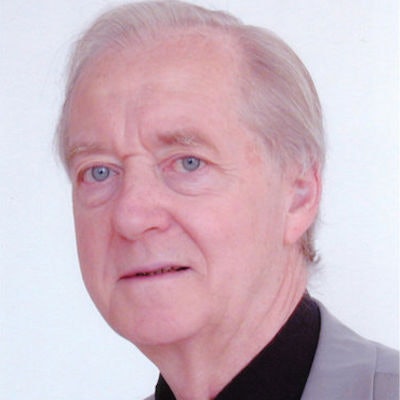
The French Society of Radiology (SFR) has published a tribute to emeritus radiologist Prof. Luc Picard, a pioneer of global interventional neuroradiology, who has died.
Prof. Luc Picard. Image courtesy of Nancy University Hospital.Picard completed his training and worked his entire career in Nancy. A neurologist by training, he anticipated the importance of imaging in the field and created the department of neuroradiology in 1969. He was a clinician at heart and strove to place patients at the center of care.
Demanding and charismatic, Picard recruited many students from all over the world who went on to become among the best specialists in the field. He was one of the founders of the French Society of Neuroradiology in 1970 and replaced René Djindjian as secretary general in 1977. He held this position for 12 years. He was editor in chief of the Journal of Neuroradiology for 24 years, from 1977 to 2001, and was an honorary member of the SFR since 2005 and an Antoine Béclère medalist.
Picard believed in a united Europe around great scientific projects. He was vice president of the European Society of Neuroradiology from 2000 to 2004 and organized its annual congress in 1997.
A humanist with a deep passion for others, Picard was fond of Terence's phrase, "Nothing that is human is foreign to me." The full tribute can be read on the SFR website.








![Overview of the study design. (A) The fully automated deep learning framework was developed to estimate body composition (BC) (defined as subcutaneous adipose tissue [SAT] in liters; visceral adipose tissue [VAT] in liters; skeletal muscle [SM] in liters; SM fat fraction [SMFF] as a percentage; and intramuscular adipose tissue [IMAT] in deciliters) from MRI. The fully automated framework comprised one model (model 1) to quantify different BC measures (SAT, VAT, SM, SMFF, and IMAT) as three-dimensional (3D) measures from whole-body MRI scans. The second model (model 2) was trained to identify standardized anatomic landmarks along the craniocaudal body axis (z coordinate field), which allowed for subdividing the whole-body measures into different subregions typically examined on clinical routine MRI scans (chest, abdomen, and pelvis). (B) BC was quantified from whole-body MRI in over 66,000 individuals from two large population-based cohort studies, the UK Biobank (UKB) (36,317 individuals) and the German National Cohort (NAKO) (30,291 individuals). Bar graphs show age distribution by sex and cohort. BMI = body mass index. (C) After the performance assessment of the fully automated framework, the change in BC measures, distributions, and profiles across age decades were investigated. Age-, sex-, and height-adjusted body composition reference curves were calculated and made publicly available in a web-based z-score calculator (https://circ-ml.github.io).](https://img.auntminnieeurope.com/mindful/smg/workspaces/default/uploads/2026/05/body-comp.XgAjTfPj1W.jpg?auto=format%2Ccompress&fit=crop&h=112&q=70&w=112)


