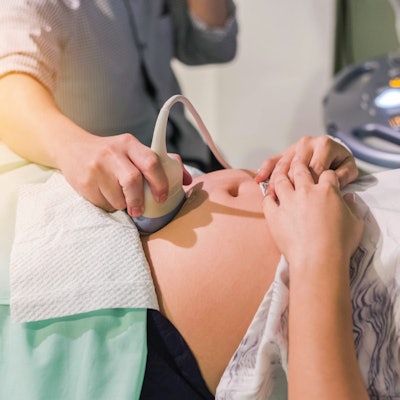
A new report has provided a stepwise framework for allowing nonessential visitors to accompany patients to outpatient appointments, such as screening ultrasound scans. The document from National Health Service (NHS) England and NHS Improvement gives practical advice for reintroducing partners into labor and maternity care appointments.
The 8 September document covers risk assessment for allowing visitors in antenatal and postnatal inpatient and outpatient settings. It was written in conjunction with the U.K. Royal College of Obstetrics and Gynaecologists, Royal College of Midwives, and the Society and College of Radiographers (SCoR).
"Reintroducing visits is challenging during a pandemic, and the priority must be the safety of all service users (including pregnant women), staff, and visitors," the guidelines stated.
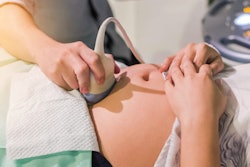
The guidelines provide a stepwise framework for allowing nonessential visitors to accompany patients to outpatient appointments, such screening ultrasound scans. The approach includes the following steps:
- Essential visitors only and single adults for consultations that may cause distress
- One adult for specific appointments, including antenatal, screening ultrasound scans, early pregnancy, antenatal or postnatal complications, birth planning, unscheduled attendances to maternity triage
- One adult for any appointment type
- Phased reintroduction of usual visiting policies, if different from the above
The guidelines also provide a similar stepwise approach for labor and birth settings and antenatal and postnatal inpatient settings. NHS England and NHS Improvement plan to review the document in November 2020.
In a release, the SCoR said it is addressing sonographer concerns related to risk assessments, including room size, physical distancing for partners, examination times, waiting room capacity, and ventilation. The society also emphasized the importance of applying a consistent approach when reintroducing partners.
"We would like to thank sonographers and other healthcare professionals for continuing to provide a safe and effective antenatal ultrasound service in addition to a wide range of nonobstetric services under challenging circumstances," the society wrote.