Anybody who thinks sports imaging is about sitting in a dark room reporting cases needs to speak with Dr. Ara Kassarjian. As a tournament physician and head of imaging at the Madrid Open tennis tournament since 2008, he has performed real-time ultrasound scans of the top players in the medical service right next to the courts.
"We have one ultrasound machine in the actual medical service area, where we see all the players. The medical service is just across from center court and next to all the treatment/physiotherapy rooms," he explained. "We have had different ultrasound machines over the years, from tiny portable ones to full-sized machines."
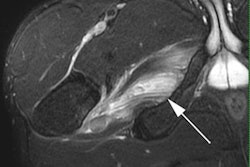
If a player needs an MRI exam or other imaging, Kassarjian personally protocols the examination and sends the player to a nearby hospital. The player returns to him with a CD of the images, which he reviews onsite with the player, his or her team, and the rest of the medical staff (sports medicine physician, orthopedic specialist, physiotherapist, etc.) involved in the case.
"I am the only radiologist at the tournament," he added. "I am there every day."
Kassarjian has been involved in the care of elite and professional athletes in the U.S. since 2002 and in Europe since 2006. He founded Elite Sports Imaging in Madrid and is now a consultant musculoskeletal radiologist. Previously, he worked as assistant professor of radiology at Harvard Medical School and the division of musculoskeletal radiology and intervention at Massachusetts General Hospital (MGH), and he is the former director of musculoskeletal MRI and CT at MGH.
Click below for a video interview recorded at ECR 2019 on 2 March.
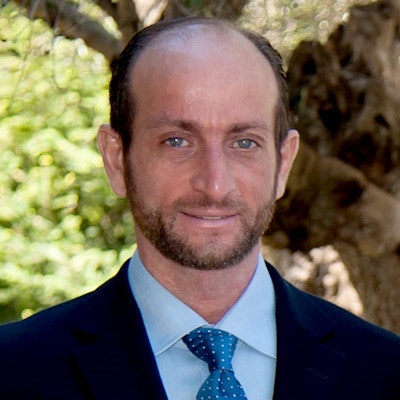
Dr. Ara Kassarjian from Madrid, Spain.