Using MRI, researchers have pinpointed an area of the brain involved in advanced planning and decision-making processes that distinguish humans from other species.
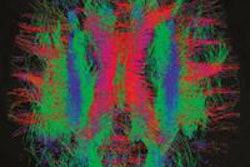
In a study published in Neuron, MR imaging of 25 adult volunteers was used to identify key components in the ventrolateral frontal cortex area of the brain and how these components connect to other brain areas. This part of the brain is involved in many of the highest aspects of cognition and language and is present only in humans and other primates.
The researchers then compared the results with equivalent MRI data from 25 macaque monkeys, according to lead author Franz-Xaver Neubert, from the University of Oxford, and colleagues.
Using the MRI data, the researchers divided the human ventrolateral frontal cortex into 12 areas that were consistent across all subjects. These 12 regions could then be compared with the organization of the monkey prefrontal cortex.
Eleven of the 12 areas were found in both the humans and monkeys and were connected similarly to other brain areas. However, one area of the human ventrolateral frontal cortex -- the lateral frontal pole prefrontal cortex -- had no equivalent in the macaque.
'We have established an area in the human frontal cortex which does not seem to have an equivalent in the monkey at all," Neubert said in a release from the University of Oxford. "This area has been identified with strategic planning and decision-making as well as 'multitasking.' "









![Overview of the study design. (A) The fully automated deep learning framework was developed to estimate body composition (BC) (defined as subcutaneous adipose tissue [SAT] in liters; visceral adipose tissue [VAT] in liters; skeletal muscle [SM] in liters; SM fat fraction [SMFF] as a percentage; and intramuscular adipose tissue [IMAT] in deciliters) from MRI. The fully automated framework comprised one model (model 1) to quantify different BC measures (SAT, VAT, SM, SMFF, and IMAT) as three-dimensional (3D) measures from whole-body MRI scans. The second model (model 2) was trained to identify standardized anatomic landmarks along the craniocaudal body axis (z coordinate field), which allowed for subdividing the whole-body measures into different subregions typically examined on clinical routine MRI scans (chest, abdomen, and pelvis). (B) BC was quantified from whole-body MRI in over 66,000 individuals from two large population-based cohort studies, the UK Biobank (UKB) (36,317 individuals) and the German National Cohort (NAKO) (30,291 individuals). Bar graphs show age distribution by sex and cohort. BMI = body mass index. (C) After the performance assessment of the fully automated framework, the change in BC measures, distributions, and profiles across age decades were investigated. Age-, sex-, and height-adjusted body composition reference curves were calculated and made publicly available in a web-based z-score calculator (https://circ-ml.github.io).](https://img.auntminnieeurope.com/mindful/smg/workspaces/default/uploads/2026/05/body-comp.XgAjTfPj1W.jpg?auto=format%2Ccompress&fit=crop&h=112&q=70&w=112)


