Michelson Diagnostics of London has won the CE Mark for clinical use of its VivoSight optical coherence tomography (OCT) scanner in Europe, in addition to nonclinical use worldwide.
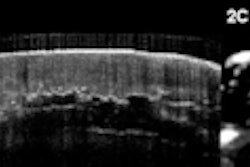
VivoSight has a handheld probe that uses multibeam optical coherence tomography to create images of surface tissue at resolutions of 7.5 microns lateral and 10 microns axial. It features four laser beams and can capture either 2D or 3D images of a 5-sq-mm region.
Michelson has begun in vivo trials of the VivoSight scanner. The first trial -- a collaboration between Michelson Diagnostics, Ludwig Maximilian University of Munich in Germany, and University College Hospital in London -- will assess the capability of the probe in differentiating premalignant and early malignant lesions, as well as demarcating nonmelanoma skin cancers before planned surgical excision. At least 100 patients will participate, the company said.







![Overview of the study design. (A) The fully automated deep learning framework was developed to estimate body composition (BC) (defined as subcutaneous adipose tissue [SAT] in liters; visceral adipose tissue [VAT] in liters; skeletal muscle [SM] in liters; SM fat fraction [SMFF] as a percentage; and intramuscular adipose tissue [IMAT] in deciliters) from MRI. The fully automated framework comprised one model (model 1) to quantify different BC measures (SAT, VAT, SM, SMFF, and IMAT) as three-dimensional (3D) measures from whole-body MRI scans. The second model (model 2) was trained to identify standardized anatomic landmarks along the craniocaudal body axis (z coordinate field), which allowed for subdividing the whole-body measures into different subregions typically examined on clinical routine MRI scans (chest, abdomen, and pelvis). (B) BC was quantified from whole-body MRI in over 66,000 individuals from two large population-based cohort studies, the UK Biobank (UKB) (36,317 individuals) and the German National Cohort (NAKO) (30,291 individuals). Bar graphs show age distribution by sex and cohort. BMI = body mass index. (C) After the performance assessment of the fully automated framework, the change in BC measures, distributions, and profiles across age decades were investigated. Age-, sex-, and height-adjusted body composition reference curves were calculated and made publicly available in a web-based z-score calculator (https://circ-ml.github.io).](https://img.auntminnieeurope.com/mindful/smg/workspaces/default/uploads/2026/05/body-comp.XgAjTfPj1W.jpg?auto=format%2Ccompress&fit=crop&h=112&q=70&w=112)


