
Oxford Enhanced Medical has changed its name to Sonosine and launched rebranding efforts with a new website.
The company's Electro Magnetic Acoustics (EMA) imaging technology is embedded in its Pulsar 1, a system that uses radio signals as well as ultrasound to reveal tissue types in areas of concern that ultrasound alone cannot detect. The handheld and mobile Pulsar 1 device allows for on-the-spot diagnoses with images comparable to MRI, according to Sonosine. The technology is easy to integrate into existing commercial scanners, it added.
The original company was established in 2006 at the University of Oxford by founder and chief technology officer Prof. David Edwards.






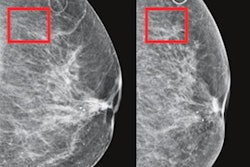



![A normal mammogram confirmed by three-year radiologic follow-up illustrates reader-marked regions of interest (ROIs) during (A) unaided (round 1) and (B) artificial intelligence (AI)–assisted (round 2) reading. Each colored dot represents an ROI for recall by a human reader. Readers could mark more than one ROI per case, represented by multiple dots of the same color. During AI-assisted reading, the AI system displayed three visible prompts: two with suspicion of malignancy scores of 35% (left mediolateral oblique [L MLO] and craniocaudal [L CC]) and one with a suspicion of malignancy score of 10% (right craniocaudal [R CC]), shown as polygonal overlays. Without AI, six of 10 readers (60%) marked a false-positive ROI. With AI assistance, this fell to two of 10 (20%). R MLO = right mediolateral oblique.](https://img.auntminnieeurope.com/mindful/smg/workspaces/default/uploads/2026/07/2026-07-14-radiology-mammogram-ai-auto-bias.H0bYO8QlWs.jpg?auto=format%2Ccompress&fit=crop&h=112&q=70&w=112)


