
Ibex Medical Analytics and Institut Curie are joining forces to improve breast cancer detection using artificial intelligence (AI).
Under the research agreement, a dataset of breast biopsy slides will be included, which will then be digitized using a digital pathology scanner and then analyzed for cancer detection by Ibex's Galen Breast software. Independently, multiple pathologists from Institut Curie will diagnose the slides, followed by blinded analysis of Galen Breast's performance.
The AI software was developed using machine learning and trained on hundreds of thousands of image samples, Ibex Medical Analytics said. The software is already in use at the pathology institute of Maccabi Healthcare Services, Israel's second-largest HMO, where it is used as a second-read.





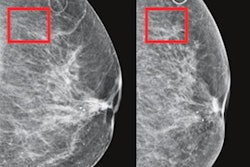


![A normal mammogram confirmed by three-year radiologic follow-up illustrates reader-marked regions of interest (ROIs) during (A) unaided (round 1) and (B) artificial intelligence (AI)–assisted (round 2) reading. Each colored dot represents an ROI for recall by a human reader. Readers could mark more than one ROI per case, represented by multiple dots of the same color. During AI-assisted reading, the AI system displayed three visible prompts: two with suspicion of malignancy scores of 35% (left mediolateral oblique [L MLO] and craniocaudal [L CC]) and one with a suspicion of malignancy score of 10% (right craniocaudal [R CC]), shown as polygonal overlays. Without AI, six of 10 readers (60%) marked a false-positive ROI. With AI assistance, this fell to two of 10 (20%). R MLO = right mediolateral oblique.](https://img.auntminnieeurope.com/mindful/smg/workspaces/default/uploads/2026/07/2026-07-14-radiology-mammogram-ai-auto-bias.H0bYO8QlWs.jpg?auto=format%2Ccompress&fit=crop&h=112&q=70&w=112)


