Dear Women's Imaging Insider,
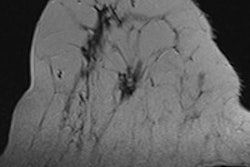
Long known to be highly accurate, breast MRI can nonetheless be challenging. Many different criteria may be used for image interpretation, and technical recommendations encompass a broad variety of examination and interpretation quality.
The BI-RADS lexicon is the most widely accepted standard, but it does not provide defined rules by which to convert specific imaging features into a diagnostic category. Also, interreader agreement is generally moderate, while diagnostic accuracy is highly variable.
Enter the Tree scoring system, which uses five diagnostic criteria to determine lesion diagnosis, and each specific combination of criteria provides a likelihood of malignancy.
But how does the Tree system measure up? And how does it compare with BI-RADS? Find out.
We have other stories in your Women's Imaging Community that deal with MRI. For instance, did you know MRI plays an important role in the early diagnosis and management of tubal pregnancy? Certain features on MRI such as "three rings" make it ideal for early diagnosis of this condition. Read more.
There are also articles about how a novel breast MRI technique can reduce biopsy rates and how MRI plus mammography still reigns supreme in terms of sensitivity.
Others articles you won't want to miss include the following:
- Adding ultrasound to mammography screening detects more early invasive breast cancer and probably reduces mortality. The Japanese trial is thought to be the first of its kind in a large, randomized, multicenter population with a focus on younger, average-risk women.
- The Dutch have found breast cancer screening works and mammography screening is a clear way of detecting cancer early, along with increased breast cancer awareness. But reducing false positives must remain an urgent priority.
- Using vascular indexes obtained via 3D power Doppler ultrasound can accurately characterize suspicious breast masses, and adding it to 2D ultrasound may reduce unnecessary biopsies, noted Turkish researchers.
As always, I enjoy hearing from you; please contact me anytime.